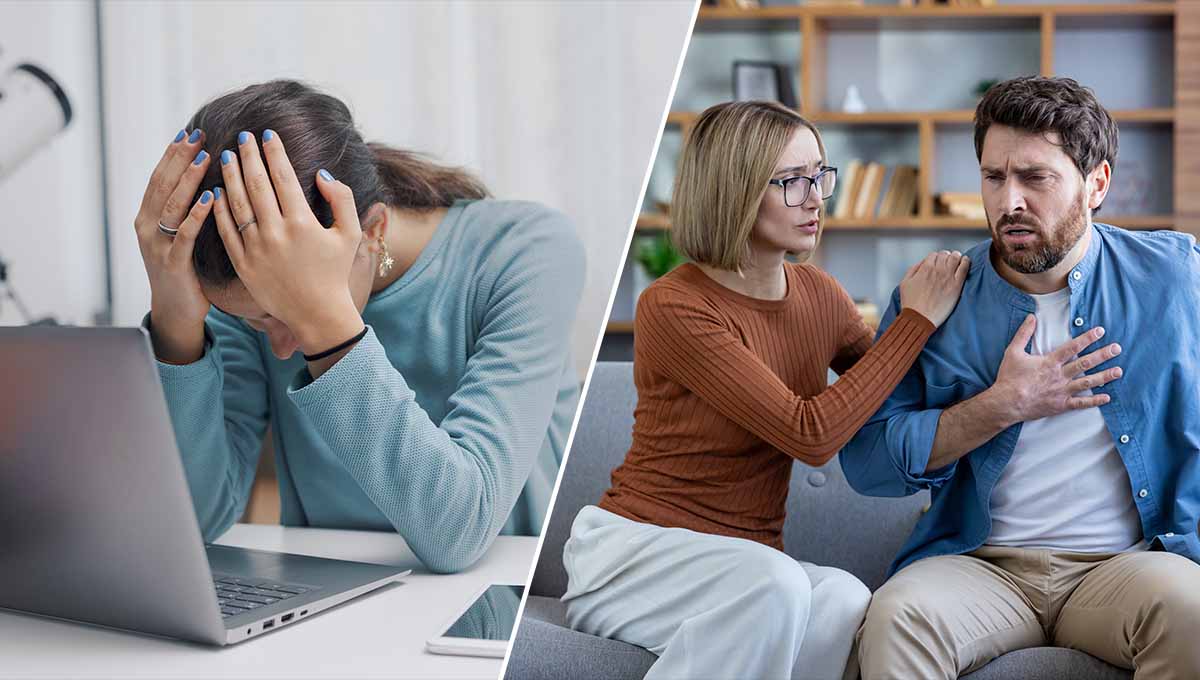
The difference between stress vs anxiety can sometimes be difficult to determine since both share common symptoms. You might experience symptoms such as heart palpitations, restlessness, insomnia, irritation, and inability to concentrate due to either stress or anxiety. It might be difficult for you to know whether you are experiencing stress or anxiety or both due to the above symptoms.
Distinguishing between stress vs anxiety is important because you will be able to understand yourself better and decide when to seek professional help. If stress or anxiety affects your daily life and overall health condition, you can seek counselling services at MAVA Behavioral Health.
What Is Anxiety vs Stress?
Stress occurs as a reaction to challenges, demands, or pressures. Stress may be brought about by such instances as work deadlines, financial constraints, relationship issues, exams, changes in one’s life, and even lack of enough sleep. Stress will diminish once the stressful situation ends.
Anxiety is characterised by prolonged fear, worry, nervousness, or unease. One may feel anxious in the absence of any immediate danger or without a clear cause for such feelings. One may also become overwhelmed by anxiety in situations that do not require much effort. Explore stress vs anxiety support through convenient telehealth services with MAVA Behavioral Health, helping you access professional mental health care from the comfort of home.
Therefore, in defining what anxiety vs stress is, one may find it helpful to examine how they arise and how long they last. The cause of stress is often easier to identify than that of anxiety.
Stress vs Anxiety: Key Differences
Although stress vs anxiety share many symptoms, a few important differences can help you tell them apart.
Stress |
Anxiety |
| Often connects to a specific situation | May occur without a clear trigger |
| Usually decreases when the situation improves | May continue even after a situation changes |
| Often involves feeling under pressure | Often involves persistent fear or worry |
| Can motivate you to respond to a challenge | Can interfere with daily activities |
| Usually feels connected to current circumstances | May involve worry about future events |
The distinction is not always straightforward. You can experience stress vs anxiety at the same time, especially during difficult periods.
Anxiety vs Stress Symptoms
Effects of stress on health include headaches, muscle pain, feelings of being overwhelmed, irritation, frustration, poor concentration skills, changes in sleep habits, fatigue, digestion problems, faster heartbeat, nervousness, and loss of appetite. Some of these effects will become more pronounced when you find yourself under stress and will subside when you get time to rest and recover.
Anxiety may be associated with constant or exaggerated worry, nervousness, being edgy, racing thoughts, restlessness, inability to concentrate, insomnia, muscle tension, fast heart rate, shortness of breath, and an extreme sense that something terrible is going to happen. You may also tend to avoid some scenarios due to fear or worry. It may be hard for you to stop feeling anxious when there is no clear source of threat around you.
Worry vs Stress vs Anxiety
Worrying is a thinking process. It can be characterized by repetitive thoughts concerning an impending problem, situation, or occurrence. On the other hand, stress is normally caused by a challenge or pressure present in one’s life. For instance, one can be stressed by an imminent deadline.
Anxiety entails both physical and psychological features. One can experience repetitive thoughts, feel tense, have physical symptoms, or feel threatened without a threat being present now.
These processes tend to interact. Worry can lead to anxiety, and stressful situations may exacerbate worry and anxiety.
Stress Attack vs Anxiety Attack
It is common for people to think that “stress attack” and “anxiety attack” are similar experiences, but this may not be true.
One possible scenario of a stress attack happens when the pressure one feels becomes too much for him or her. One can feel tense, frustrated, emotionally drained, and overwhelmed by all that is going on. For an anxiety attack, there can be an extreme rise in the level of fear and anxiety. This can manifest itself through the feeling of a pounding heart, tremors, dizziness, hyperventilation, chest pain, or the feeling of an impending doom.
There is also a possibility of having a panic attack, which may or may not have a trigger. When you experience unusual and severe symptoms, such as chest pains, passing out, severe difficulty in breathing, or symptoms that may require a medical intervention, please see your doctor immediately.
Chronic Stress vs Anxiety: Why Duration Matters
But it should be noted that the differences between chronic stress and anxiety are especially significant in the case of long-lasting problems, which can last for several weeks and even months. As for acute stress, then its occurrence is obvious, and it definitely occurs during the period of stress and will end when the level of stress starts decreasing. Chronic stress occurs when a person feels constant mental and physical tension.
It also may cause sleeping problems, mood disorders, concentration, low energy, and health problems as well. In addition, chronic stress raises the risk of anxiety disorder occurrence and makes it even harder. When the uncontrollable fear or worry lasts too long and affects a person’s ability to work, socialize, sleep, study, and carry out daily activities, it is defined as an anxiety disorder.
Difference Between Stress vs Anxiety and Depression
These are characterized by consistent feelings of sadness, hopelessness, loss of interest, fatigue, changes in sleep or eating habits, difficulty concentrating, and other emotions and symptoms. The American Psychological Association (APA) offers reliable information regarding stress, anxiety, and mental health problems.
A person can have more than one problem at the same time. As an example, chronic stress can cause anxiety, which can then affect one’s mood and energy levels. If the problem continues for a long period of time or interferes with your normal activities, it is advisable to seek expert advice.
Stress vs Anxiety Test: Can a Test Tell You the Difference?
You might look up an online stress vs anxiety test if you need a fast answer. An online survey will be helpful in identifying symptoms; however, it will not be a substitute for an evaluation by a professional.
Useful self-check questions could be the following:
- What causes my symptoms?
- For how long do I have them?
- Do my symptoms go away after the stressful situation is over?
- Am I concerned even if there is nothing dangerous going on?
- Do my symptoms affect my sleep, work, and social life?
- Do I avoid situations due to fear or anxiety?
- Do physical symptoms prevent me from functioning properly?
Stress vs Anxiety Management Strategies
The management of stress vs anxiety is based on what you feel, the severity of your symptoms, and the length of time that it has been going on.
Managing Immediate Stress
Try doing the following practical things:
- Splitting bigger tasks into smaller ones
- Taking breaks when you do something hard
- Sticking to a regular sleeping schedule
- Eating healthy food at certain times
- Exercising
- Avoiding too much caffeine
- Talking to someone you can rely on
- Set reasonable limits
Managing Anxiety
In case of anxiety, try to do the following:
- Take slow and controlled breaths
- Use grounding techniques
- Detect negative thought patterns
- Confronting rather than avoiding appropriate situations gradually
- Stick to regular sleeping and exercise routines.
- Decrease your caffeine consumption
- Talking to a competent mental health professional
Treatment for stress vs anxiety
Stress vs anxiety both affect a person’s mind and body, but they are not the same. Stress often comes from a clear problem, such as exams, work, money, or family issues, and it may go away when the problem ends. Anxiety can stay for a long time, even when a person has no clear reason to feel worried. Stress may cause headaches, tiredness, and poor sleep, while anxiety may cause fear, restlessness, fast heartbeat, and constant worry.
Treatment for stress vs anxiety may include regular exercise, healthy sleep, relaxation, deep breathing, and talking with a trusted person. A doctor or therapist may also use counselling or medicine when symptoms cause serious problems in daily life.
Medication for Stress vs Anxiety
While taking into account the choice between medications for dealing with stress and anxiety, it is important to consider the underlying cause and the symptoms and their effects on your daily routine. It is quite common that stress can be reduced once you deal with the underlying cause of your stress, get sufficient sleep, practise relaxation techniques, and make necessary changes in your lifestyle.
Anxiety may need some medical intervention and, possibly, mental health medication. A specialist will help you define whether you need it.
When Should You Seek Professional Support?
Seeking professional help may be warranted if your stress or anxiety persists for a prolonged time, affects work, school, personal relationships, or your ability to carry out your normal routine, impacts your ability to sleep, results in physical complaints on a regular basis, causes you to shy away from vital tasks, is hard to manage, or causes severe emotional discomfort. If you choose to come to MAVA Behavioral Health, we can discuss your issues, gain insight into your problems, and guide you in a positive direction.
Final Thoughts
Knowing the difference between stress vs anxiety can assist you in determining how you feel and finding a solution that will help you improve your mental health. The former may occur due to some difficulty, while the latter may persist regardless of any particular stressor.
Sometimes, you may feel both stress vs anxiety at once, particularly if you are under constant stress for a long period of time. Should your stress vs anxiety interfere with your life, including your sleep, personal relations, work, and other activities, you may want to seek professional help at MAVA Behavioral Health.
FAQs
1. Does stress have physical symptoms?
Yes. Stress may lead to headaches, muscle pain, tiredness, digestive problems, quickened heartbeat, perspiration, and insomnia. It is advisable to manage the root cause of stress to alleviate these physical symptoms.
2. Will therapy assist with stress versus anxiety?
Yes. Therapy can enable one to learn how to differentiate between stress and anxiety. This will also allow one to have better management of difficult situations.
3. Is it possible for lifestyle modifications to aid stress vs anxiety?
Yes. Among other things, such as exercise, sufficient sleep, a healthy diet, relaxation, and good practices, are what can help deal with stress vs anxiety. These practices are sure to be more effective together with professional treatment in the event of recurring symptoms.
4. Does stress vs anxiety cause fast heartbeats?
Yes. Both stress vs anxiety have the ability to activate the body’s response to stress and the perceived threat to the body, thus leading to fast heartbeats, sweating, restlessness or muscle tension.
5. Can lack of sleep affect stress vs anxiety negatively?
Yes. Lack of sleep or not getting enough sleep is likely to worsen the condition. Establishing a regular sleeping pattern will be helpful for you.