
Anxiety nausea when you are under stress can be quite puzzling and disturbing. Nausea can occur before an important meeting, during a panic attack, after a stressful thought, and even when there seems to be no reason for it.
The cause of anxiety nausea is the reaction of both the mind and the body to stress. Although there are many physical causes of nausea, the fact is that it does bring about certain stomach issues, including nausea, loss of appetite, and fear of vomiting. Knowing the connection between anxiety and nausea will enable you to understand how to handle nausea better.
What Is Anxiety Nausea?
Anxiety nausea is the form of nausea that is brought about by anxiety, stress, fear, or even the activation of the stress response. Anxiety does not cause nausea to be hallucinating. Nausea can be a real sensation. Telehealth services offer convenient access to healthcare professionals who can help evaluate and manage anxiety-related nausea.
You become hypervigilant once you get anxious, which may be reflected in your body via an increase in heart rate, changes in breathing, and your digestive system.
Some of the symptoms of anxiety Nausea includes:
- Discomfort in your stomach
- Discomfort in your stomach
- Contraction of your stomach muscles
- Reduced appetite
- Pricking sensation in your stomach
- Nausea either before or during the stressors
Anxiety Nausea vs Real Nausea: Is There a Difference?
The crucial thing to understand is that it is still a physical sensation. The distinction usually arises based on the causative factor of the sensation itself. Anxiety-induced nausea manifests when you are stressed, afraid, panicking, thinking fast, in social situations, fearing illness or vomiting, or anticipating discomfort. On the other hand, physical factors such as illness, infections, side effects of medications, digestive issues, migraines, hormonal changes, and many other medical concerns could also be the reason for nausea.
Anxiety Nausea Symptoms to Watch For
The feeling of nausea due to anxiety might be anything from mild indigestion to severe nausea. One can experience nausea by itself or along with other anxiety symptoms. Nausea symptoms include abdominal discomfort, a nauseous sensation, decreased appetite, dry mouth, perspiration, trembling, increased heart rate, dizzy spells, chest pressure, rapid and short breaths, inability to relax, racing thoughts, and an uncontrollable desire to get out of that situation. If some of the above-listed symptoms occur simultaneously under stressful conditions, then nausea might have a connection to anxiety.
How Anxiety and Nausea Can Reinforce Each Other
You may be feeling anxiety and subsequently nausea. The experience of nausea can cause fear of being ill. This can lead to increased levels of anxiety, making nausea worse.
Eventually, you will find yourself constantly checking your stomach. A mild sensation from your digestive system will feel very threatening.
Such a pattern can be particularly hard to deal with when both anxiety-induced nausea and emetophobia come together.
Anxiety Nausea and Emetophobia
There is an anxiety-emetophobia (vomiting phobia) cycle that makes matters hard for people. it about getting sick or vomiting can make one experience nausea, abdominal pain, dizziness, and a fast heartbeat.
It is vital to understand how it impacts the body to cope effectively with the symptoms. Using the right coping mechanisms and support, you can handle anxious thoughts and the fear associated with nausea.
Can Anxiety Causing Nausea for Days?
Indeed, nausea lasting days may arise due to anxiety if the level of it is high enough; however, constant nausea does not necessarily mean that it is to blame. In case you continue suffering from nausea for many days, especially if no anxiety-related reasons are evident, it would be better to consult a doctor.
Subconscious Anxiety Nausea: Can Anxiety Affect You Without Feeling Obviously Anxious?
The experience of nausea due to subconscious anxiety is rather perplexing. You may not tell yourself that you are experiencing anxiety, but your body still gives signals of stress.
This happens since your body responds to the stressors that you have such as pressures, unknowns, and learned fears, even before you are aware of the emotion. Healthline provides trusted health information to help you better understand anxiety-related nausea and when to seek care.
There are instances where you might experience nausea in certain circumstances, locations, time of day, or activities without linking them to your feelings of anxiety.
Anxiety and Nausea in the Morning
Morning anxiety and nausea may be the result of waking up feelings of worry regarding the upcoming day. it often includes thoughts about work, school, family, appointments, responsibilities, and upcoming events. An empty stomach, lack of sleep, dehydration, or other physical factors may worsen your morning nausea. Pay attention to what happens before you experience morning nausea.
Ask yourself if you had enough sleep, food, and drinks yesterday, if stress-causing thoughts arise immediately after waking, if distraction alleviates your nausea, and if it occurs before specific events.
Nausea Anxiety How to Stop the Anxiety-Nausea Cycle
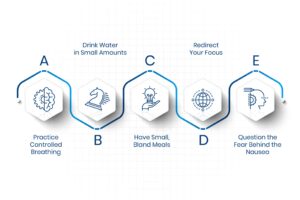
If you have been asking yourself questions like, “How can I stop nausea anxiety?”, try calming your body rather than battling the symptoms.
1. Practice Controlled Breathing
Since anxiety causes fast breathing, slow breathing can ease physical arousal.
Try breathing gently through your nose while prolonging exhalation. If deep breathing makes you feel dizzy, do not force it.
2. Drink Water in Small Amounts
Small amounts of water are easier to consume than drinking a lot at once.
Dehydration can be a cause of your condition; therefore, bringing back the fluid balance will alleviate your symptoms.
3. Have Small, Bland Meals
Since nausea may make you have little to no appetite, you may want to eat small meals that are easy to digest.
Make sure to avoid starving since the lack of food will aggravate your nausea.
4. Redirect Your Focus
Reassessing yourself all the time for signs that you are still experiencing nausea can cause further stress.
Do something to calm yourself through gentle exercise, music, or even just having a conversation.
5. Question the Fear Behind the Nausea
When the primary fear is I am about to throw up”, don’t take it at face value.
Rather, it is I am feeling nauseated right now, and I can allow it to pass.
Anxiety Nausea Relief: Practical Strategies
To get rid of anxiety-related nausea, it is important to relieve both physical distress and anxiety itself. The following are some ways to do so: breathing deeply and slowly, having proper meals, drinking enough water, doing light exercising, getting enough sleep, relaxing oneself, being mindful, and cutting down on caffeine. There are also options of therapy to deal with chronic anxiety and coping techniques to help deal with panic and worries to make it easier to cope with nausea. It is not always possible to get rid of nausea immediately.
Anxiety Nausea Treatment: When Professional Support Can Help
You may get assistance from a mental health professional to comprehend anxiety patterns and learn techniques for dealing with anxiety. For instance, cognitive behavioral therapy (CBT) can assist you in identifying any negative thoughts and making behavior changes.
When it impacts eating, sleep, work, school, relationships, or your day-to-day activities, seeking professional assistance can be highly beneficial.
Anxiety Nausea Medication
Doctors base the choice of medications on your symptoms, medical history, other medications, and the underlying cause of your nausea and anxiety. A trained healthcare professional can decide if medication is right for you.
Medication management could sometimes be a part of the treatment, while coping skills and therapy could also be effective.
How to Help Anxiety Nausea in the Moment
In case nausea arises suddenly while you are feeling anxious, follow this basic routine:
Stop → breathe slowly → release your shoulder muscles → drink some water → convince yourself that this sensation can go away on its own → divert your mind’s attention elsewhere.
You don’t need to push yourself to absolute calmness; just allow your nervous system to calm down.
In case nausea rises due to your fear of throwing up, try not to constantly check your body for the symptoms of becoming sick, as constant checking will only hold your mind’s attention captive.
When to Seek Medical or Mental Health Support
While anxiety can result in nausea, it is not true that all cases of nausea are caused by anxiety. Get professional help for persistent, severe, unexplainable nausea or other worrying symptoms.
You should also consider getting psychological help if you experience nausea along with anxiety, panic attacks, avoidance, fear of vomiting, or disruption of your daily activities due to anxiety.
At MAVA Behavioral Health, we have professionals who can create a healthy environment for discussing anxiety and related issues.
Final Thoughts
Nausea that is caused by anxiety can be very real and physically intense. When the body experiences stress, worry, or fear through the nervous system, the digestive system can also respond. This knowledge can help you not feel afraid of your symptoms but rather gain control over yourself.
If nausea tends to occur when experiencing anxiety or panic or stressful events, concentrating on improving your emotional state can be useful to end this vicious circle. At MAVA Behavioral Health, you can receive professional help and learn how to deal with anxiety and become more confident about your body.
FAQs
1. Is it possible that anxiety will cause nausea for several days?
Yes, it is possible that it will be a factor that contributes to the development of nausea for several days. However, constant nausea may be caused by other factors as well, so it is recommended to consult a doctor.
2. Is it possible for subconscious anxiety to result in nausea?
Yes, the stress response can occur subconsciously. Recording the instances when nausea occurs can be very helpful.
3. Is anxiety nausea dangerous?
It is not dangerous, but it is worth considering that nausea can be a symptom of other health issues. In case of serious and persistent nausea, one should seek medical help.
4. Can therapy assist in treating anxiety and nausea?
Yes, therapy can help treat anxiety, fear, and any other negative thinking patterns that might result in causing anxiety and nausea. A therapist can treat it using cognitive behavioral therapy.
5. What is the best remedy for anxiety and nausea?
This will highly depend on the reason and level of the condition. This may include changes in one’s lifestyle, therapy, controlling your anxiety, and taking some medication.