

Retraumatization can influence how you react to your memories, situations, relationships, and surroundings even after the traumatic experience has already ended. At times, the new experience can cause the feeling that the traumatic experience is repeating itself. Such an experience is known as retraumatization.
Knowing more about retraumatization will enable you to identify the emotional and physical response before you become overwhelmed. Whether you are experiencing trauma symptoms, helping someone you love, or working on retraumatization in therapy, knowledge of retraumatization will enable you to manage the experience safely. Compassionate mental health care services at MAVA Behavioral Health can offer a safe place for understanding trauma reactions and developing safe coping skills.
What Is Retraumatization?
It occurs when present experiences trigger the emotions and reactions of past trauma. The present experience does not have to be like the past trauma but might have similarities.
For instance, someone who went through abuse in their first relationship might go through intense feelings of fear when a conflict arises in their current relationship. The conflict may not necessarily contain any form of abuse but might trigger the reaction because the body reacts to danger.
The experience may be consciously or unconsciously planned. The conversation, environment, sound, smell, relationships, medical procedure, or therapy sessions might trigger past traumas. It is essential to understand that retraumatization does not mean you are going backwards.
Trauma responses can arise in times of stress, and noticing such can help immensely in the healing process.
Retraumatization vs Trigger: What Is the Difference?
Retraumatization and trigger sound alike; however, they refer to different types of phenomena. Trigger refers to an action that provokes an emotional, physiological or psychological reaction related to past experience. A trigger does not always result in retraumatization. It may cause anxiety, fear, anger, sadness and various other responses.
Retraumatization is more intense, overwhelming individuals and emotionally taking them back to the event. Under certain circumstances, triggers can lead to retraumatization especially when you do not feel secure or safe.
Signs of Retraumatization
It manifests itself through emotional symptoms, physical symptoms, mental symptoms or behavioral symptoms. You could experience any of them or a combination of all of them. By recognizing such symptoms, you will get a chance to reflect and understand what is going on rather than criticising yourself.
Retraumatization can feel overwhelming MAVA Behavioral Health offers compassionate telehealth services to help you understand trauma responses and find support.
Some common signs are:
- Feeling suddenly unsafe without being in an actual dangerous situation
- Anxiety or panic attack
- Intrusive thoughts or memories
- Bad dreams about previously experienced trauma
- Excessive irritability or aggression
- Problems with focusing
- Avoidance of people, places, discussions and activities
- Sleep issues
- Lack of emotions
Retraumatization Symptoms
Symptoms of Retraumatization May Be Different for everyone. Your reaction will depend on your previous trauma experiences, current level of stress, support network, and feeling safe.
Emotional Symptoms
Strong feelings of fear, sadness, shame, anger, hopelessness, helplessness, emotional overwhelm, and numbness exist.
Physical Symptoms
The experience of trauma may trigger a fight or flight reaction in the body. You may experience a fast heartbeat, tense muscles, headaches, sweating, shaking, nausea, fatigue, and insomnia.
Cognitive Symptoms
You could have trouble focusing or experience intrusive thoughts, unwanted memories, negative thoughts, and difficulty making decisions.
Behavioral Symptoms
You could be avoiding others or situations, being highly aware of your surroundings, struggling to set boundaries, or using maladaptive coping mechanisms to escape emotional pain.
Examples of Retraumatization
Consider an individual involved in a very traumatic car crash. Getting into a car in heavy traffic conditions may trigger anxiety, body tension, and memories of past incidents. Another case may be that of someone who experiences emotional abuse in childhood. Being on the receiving end of an unpleasant tone from a boss may trigger the emotions associated with past events.
Medical procedures may also be problematic. A trauma victim of a previous procedure may be anxious while undergoing another, especially if it resembles the previous procedure in terms of environment and procedure.
PTSD and Retraumatization
Due to ptsd retraumatization may be seen through the recurrence or increase of the symptoms associated with trauma due to an experience that triggers memories of past traumas.
Everyone who undergoes it may not necessarily have PTSD, since retraumatization doesn’t necessarily indicate the presence of PTSD. PTSD is a distinct mental disorder that is characterised by a set of symptoms due to trauma exposure. Psychology Today is a mental health resource that offers information about psychology, therapy, relationships, and emotional well-being.
If you have intrusive memories, avoidance, changes in moods and thoughts, hyper-vigilance, difficulty sleeping, or severe distress after a trauma experience, then a professional assessment may help you determine your condition.
Retraumatization in Therapy
The therapist needs to approach the process of retreating into past traumas during therapy cautiously since therapy is supposed to give a safe place for you to work out your difficulties with suitable assistance.
Certain emotions are expected as a reaction to any trauma. Still, the trauma-sensitive approach to therapy includes safety, trust, choice, collaboration, and peace. You do not need to discuss all the specifics of your traumas right away. Rather, you may simply let your therapist know that discussing some particular thing makes you feel uneasy.
Retraumatization in Relationships
Traumatization can occur in a relationship where the present relational behaviors are similar to past behaviors of trauma, such as neglect, abuse, betrayal, controlling, abandonment, or being unstable.
A delayed message may signify abandonment after past rejection. An altercation in a relationship may seem threatening after past abuse. Good relationships can regain strength through communication, setting boundaries, respect, consistency, and safety. Your partner cannot heal you from trauma. If your relationship involves intimidation, abuse, or violence, then safety should come first.
Dealing With Retraumatization
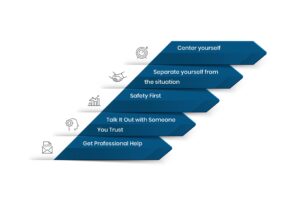
Resisting Retraumatization should not involve making yourself feel emotionless. Rather, it involves minimizing your unnecessary exposure to traumatic experiences and enhancing your feeling of security and control.
In preparation for hard situations, one can identify triggers, make plans to deal with them, communicate boundaries and build a network of support. In therapy, they can discuss pacing too. There is no need to address trauma all at once; a gradual approach may be more effective.
1. Center yourself
Observe your surroundings and determine where you are. Make note of the date, environment, and the sensory inputs such as visual stimuli, sounds, and touches.
2. Separate yourself from the situation
If possible, separate yourself from the environment, experience, or discussion which feels too much for you. Even taking a brief time out gives your nervous system time to relax.
3. Safety First
Get to a safe place if your level of distress increases and remember that you are safe at this very moment.
4. Talk It Out with Someone You Trust
Tell someone who will listen and be compassionate to you about what you are going through without passing judgement.
5. Get Professional Help
A professional mental health practitioner can guide you through dealing with the effects of trauma on your psychological well-being.
Retraumatizing Yourself: What Does It Mean?
The term retraumatizing yourself can lead to self-blaming at times. You do not necessarily re-traumatize yourself by experiencing any traumatic response due to an occurrence or trigger.
Nevertheless, constant exposure to negative circumstances, toxic relationships, or self-defeating coping mechanisms can ensure that your trauma symptoms are always alive. Instead of self-blaming, it is better to ask yourself the questions: “What makes me feel unsafe? And what help do I need?
Contact Us
If you want some compassionate help for your mental health problems, then reach out to us at MAVA Behavioral Health. Our telemedicine service allows you to have access to our support right from the comfort of your own home. Tell us your issues and feel free to discuss your requirements. Learn more about our services, treatment, and appointment schedule today.
When Should You Seek Professional Support?
It is recommended that you visit a professional if you have trauma symptoms which affect your ability to perform your activities of daily living, like work, school, social activities, sleeping, or just generally make you feel unsafe.
If you are experiencing any of the following symptoms: panic attacks, intrusive memories, severe avoidance, dissociation, nightmares, numbing emotions, or suicidal thoughts, then you might require some professional help.
A mental health professional will help you identify your symptoms and will help determine what kind of treatment could be most suitable for you. MAVA Behavioral Health could be one of the first places to visit to know more about behavioral health services.
Final Thoughts
It may be an incredibly confusing and difficult experience; however, being able to understand your reaction to such may prove invaluable for recovery. Identifying what retraumatization is, recognizing signs of retraumatization, knowing the triggers of it, and using proper coping mechanisms may provide you with tools to deal with this experience.
With proper support, boundaries, and trauma-focused care, one is able to deal with symptoms of trauma and remain grounded and safe at the present moment. MAVA Behavioral Health could be able to help you find behavioral health solutions and move forward with your mental health.
FAQs
What does retraumatization feel like?
Retraumatization may cause fear, anxiety, anger, sadness, helplessness, confusion, or even the overwhelming urge to escape.
What are the Signs of Retraumatization?
Some of the signs that you have it may include stress, physical tension, panic attacks, intrusive memories, dissociation, disturbance of sleep cycles, lack of concentration, and a lot more.