

It’s mentally and physically exhausting to always be on your guard. In hypervigilance, a risky scenario, people naturally don’t take their foot off the gas. When there is no immediate threat, some people are still on hyper-alert. The constant feeling of being threatened may impact the quality of relationships, occupations, sleep, and health.
In addition, it is a condition in which someone is hyperaware and constantly focuses on what they perceive as a threat. When it comes to hypervigilance, it is a response from the brain to being in a stressful or traumatic experience for many people. This is an explanation of the symptoms of hypervigilance, some of its causes, several types, and what can be done to move forward when it happens.
What Is Hypervigilance Disorder?
Many people look for hypervigilance disorder, but hypervigilance does not constitute a specific clinical diagnosis. Healthcare professionals are working to identify and treat the underlying issue that’s resulting in elevated arousal instead of this being an “independent disorder.” Instead, it is a symptom that is commonly seen with:
- PTSD
- Complex PTSD (C-PTSD)
- Generalized anxiety disorder
- Panic disorder
- Depression
- Obsessive-compulsive disorder (OCD)
- Certain personality disorders
At MAVA Behavioral Health, patient-specific hypervigilant treatment is available via secure telehealth services, so patients can receive expert care at home. Our licensed providers recognize your symptoms and develop your medication management plan based on it. Reserve a telephonic appointment today for available and caring mental wellness treatment.
Hypervigilance Symptoms
If a person recognizes the signs of hypervigilance, they can get help in time, which helps to prevent increasing nerve tension.
- Frequently reviewing the environment
- Quick to pick up on stress, easily startled or jumpy
- Being unable to relax or unwind
- Overthinking/racing thoughts.
- Rapid heartbeat and quick breathing.
- Persistent muscle tension
- Insomnia or inability to sleep.
- Low cognitive control of tasks/activities
- Regular Monitoring of locks, doors, and windows
- Often look over the shoulder when walking
- Panicking or becoming too stressed in busy places.
Hypervigilance Examples in Daily Life
- The Room Cleanup: Getting into a restaurant and doing a floor sweep straight out of the door – mapping out all the escape routes and everyone that went through your area when you walked through the door.
- Taking repeated calls from your phone or security cameras because you are continually worried about network failures or trouble.
- The Sound Startle: Reacting with a jump and a racing heart to common, harmless noises such as a door banging or a car backfiring for up to a few minutes.
Types and Forms of Hypervigilance
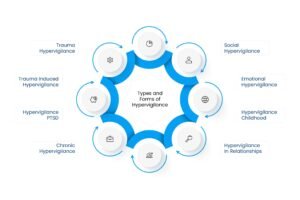
Trauma Hypervigilance
Trauma hypervigilance occurs when an experience has been, or is likely to be, distressing, overwhelming, or threatening to life. The brain learns to expect danger in the future, and safety becomes a falsehood.
Trauma-Induced Hypervigilance
Concerning trauma-induced hypervigilance, the brain after trauma persists in maintaining a state of hypervigilance, keeping the brain’s ‘danger system’ (amygdala) activated after the event has passed. In reportage, there’s a tendency towards bringing up and continuing to live as if the danger that formerly existed is still happening today.
Hypervigilance PTSD
Hypervigilance is one of the most common symptoms of post-traumatic stress disorder (PTSD). People with PTSD often remain on high alert, even when they are in safe environments. They may startle easily at unexpected sounds or movements, avoid unfamiliar places or situations, and constantly scan their surroundings for potential danger.
Chronic Hypervigilance
If body stress is continually activated for weeks, months, or years, it turns into chronic hypervigilance. This survival loop can lead to marked fatigue of the body over time, with lower energy levels, lack of sleep, digestive disorders, and a host of other physical health problems.
Social Hypervigilance
Social hypervigilance is high levels of monitoring of social interactions. People might be constantly monitoring other people’s body language, gestures, facial expressions, and tone of voice or casual conversation because they really fear criticism, rejection, exclusion, or conflict.
Emotional Hypervigilance
Emotional hypervigilance is an increased responsiveness to others’ emotional internal states. The person with this feeling might feel that they have to be responsible for other people’s feelings or that they must watch out for very subtle emotions (such as anger, disappointment, or disapproval) from others.
Hypervigilance Childhood Trauma
Hypervigilance often develops as a response to childhood trauma. Children who grow up in abusive, neglectful, unpredictable, or emotionally unsafe environments may learn to stay constantly alert to protect themselves. They become highly sensitive to changes in people’s moods, voices, or behavior, always trying to “read the room” to avoid conflict or danger.
Hypervigilance in Relationships
When it comes to grown adults, hypervigilance in relationships can result in replaying conversations in headberries, seeking constant confirmation, feeling a great deal of worry about rejection, or taking a partner’s space requests as rejection.
What Causes Hypervigilance?
Any time you think, “Hypervigilance, what is it?” you can go back to the basic cause or purpose: learned nervous system behavior that needs to remain vigilant for survival. Factors include:
- The nervous system is in a permanent state of alertness for survival.
- Shock or trauma (physical, emotional, or psychological). Overwhelming experiences, or shock, physical, emotional, or psychological.
- Any other or related disorders following exposure to trauma—PTSP / Complex PTSD (C-PTSD).
- Previous history of abuse, whether it be childhood or emotional neglect, or inconsistent home situations.
- Exposure to constant stress and ongoing instability over long periods of time.
- Extreme anxiety disorders, recurrent panic attacks, or chronic anxiety.
- Domestic violence, military battle, serious accident,t or medical trauma.
The Hypervigilance Test: How is it Diagnosed?
A common question on the minds of many is what would it mean if they found an online hypervigilance test to help them understand what they are experiencing? Internet quizzes can be useful for identifying common patterns and symptoms, but they will not be 100% accurate in determining whether you have either hypervigilance or another mental disorder. So, The website of Healthline explains that hypervigilance is an over-active level of awareness where an individual constantly scans their environment for threats.
It’s important to consult with a licensed mental health professional for an accurate diagnosis. To determine the cause, they will ask you about your symptoms, experiences, and medical history. They can identify whether or not your symptoms are related to PTSD, an anxiety disorder, another trauma-related disorder, and suggest the appropriate course of treatment.
Hypervigilance Treatment and Recovery
Thankfully, you don’t need to be in an endless struggle to survive. Treatment of hypervigilance typically includes calming the overactive nervous system, as well as the root cause that occurred in history.
- Cognitive Behavioral Therapy (CBT): Identifies unhelpful and catastrophic thinking patterns in isolation from actual events and challenges them, thereby helping to reframe thoughts and reduce the triggering of chronic hyperalertness.
- Eye Movement Desensitization and Reprocessing (EMDR): A structured evidence-based trauma therapy and technique, which helps to restructure traumatic memories in the brain, removing the emotional content so the body doesn’t react to the past.
- Somatic Experiencing: Aims to process how to release the survival energy that is stuck in the body due to trauma by focusing on the sensations of the body.
Hypervigilance Medication
No single hypervigilance medication that targets only hypervigilance is on the market. Healthcare providers, however, may prescribe medication to help control the underlying conditions that are causing it. These medication management options can include:
- Antidepressants / SNRIs – To restore brain chemistry and to decrease general anxiety.
- Anti-anxiety drugs: To treat symptoms on a specific, time-limited basis.
- Prazosin: Used sometimes to reduce the number of nightmares in PTSD and hyperactivity.
How to Treat Hypervigilance: Practical Self-Care
In case you’re interested in finding out about solutions to hypervigilance along with conventional mental health treatment, it’s important to investigate options for daily nervous system regulation:
- Engage in Grounding techniques (5-4-3-2-1, naming 5 things that you can see, 4 things that you can touch, 3 things that you can hear, things that 2 you can smell, and 1thing that you can taste—can get you out of a threat loop and into the safe space of now).
- Practice Deep Breathing, reinforcing longer breathing out (box breathing or 4-7-8 breathing) to let your vagus nerve know that it can relax.
- Promote Healthy Sleep Hygiene: As hypervigilance hampers sleep, try to make sleeping surroundings dark, quiet, and secure, allowing for restful sleep.
- Cut Back on Stimulants: Limit caffeine and nicotine—both of which can also trigger and make the body more prone to responding physiologically to threat as “fight-or-flight.
How to Stop Hypervigilance?
It takes time and retraining of the brain to become unhypervigilant. Here are some steps you can take today to begin to change the pattern:
- Catch the Scan: Where is your mind scanning? Notice when you start to scan for threats or overanalyze a social cue. Just write it down as follows: “My brain is trying to protect me; I am safe right now.
- Check the Threat: Slightly probe the catastrophic thought. Think, “Is there any visible or present danger, or am I reacting to something from the past?
- Predictable Routines: A highly sensitive nervous system loves structure from a predictable routine, and this helps lower its cognitive load.
- Work on Self-Compassion: Your hypervigilance was terrific armor to defend you when things were really unsafe. Patience is the key in dealing with your body—it’s learning to be without its armor.
Final Thoughts
Hypervigilance is NOT being overly careful. It will maintain the alertness of the mind and body at all times. Over time, it can impact your relationships, emotional state, and physical well-being. It can emerge in response to trauma, life stress, or lifelong difficulties in childhood.
At MAVA Behavioral Health, knowledgeable psychiatric healthcare providers determine the root causes behind hypervigilance and design customised medication program plans. Medications can help with anxiety, soothe the nervous system, and help with constant feelings of danger in the situation, if appropriate. By taking the steps outlined above and following treatment and medical care, you can find a sense of safety, get back to living normal lives, and aim for permanent recovery.