

Do you ever feel as if you’re observing your own life behind a thick sheet of glass? This is due to emotional numbness! You can witness everything happening around you but feel absolutely no connection whatsoever to the experience. Maybe you find it hard to feel true bliss, utter despair, or even just good old-fashioned boy/girl crushes anymore? If this sounds like you, then it might just be that you are experiencing emotional numbness.
Although this may sound incredibly scary or even lonely, the reality of it is that it is not something you are doomed to for your whole life. Emotional numbness is actually very often a defense mechanism of the brain, and in this guide, we’re going to explore what emotional numbness is, the signs of emotional numbness, what causes it, and above all, what you can do to get through it and feel like you again.
What Is Emotional Numbness?
Have you ever just felt numb to the world? Well, that’s pretty much what emotional numbness is. It’s kind of like a dimmer switch on your feelings has been turned way down. You may be having a hard time feeling happiness or enthusiasm, or even anger and sadness.
You might just be going through your everyday life like it is a little “blah. Things that usually made you feel excited just aren’t doing it anymore, and people that you usually love and connect with feel foreign and distant. Emotional numbness is a defense mechanism that your mind activates (very unconsciously and automatically) after a traumatic event has taken place. In a nutshell, it’s like your brain is saying, “Whoa, that’s way too much. I’m going just to tone it down.
Lots and lots of people have been finding themselves detached from those around them, as if they were watching their lives unfold through a muted gray screen. Through Telehealth services, patients can have consultations with health professionals from their home through video and telephone.
Emotional Numbness Signs
If you recognize yourself in any of these signs, then don’t hesitate to ask for professional help. We’ll list some of the symptoms that people with emotional numbness might experience in everyday life.
- No positive feelings: you don’t experience anything positive for weeks or months.
- Loss of interest: things you normally like no longer appeal to you.
- Feeling hollow: you have the feeling you’re hollow. You feel separated from the world around you.
- No reaction: you don’t react to events that should normally trigger emotions of joy or sorrow in you.
- Social struggle: you have great difficulty contacting friends or acquaintances.
- Disconnected: You don’t feel like a participant in what’s happening around you.
- Low energy: You lack the motivation to complete daily tasks.
- Flat feelings: even with the people you love most, you don’t experience positive emotions or affection.
What Causes Emotional Numbness?
In order to successfully find the emotional numbness treatment that works, you need to understand why you are experiencing it. Why are you feeling numb? There are various reasons as to why you feel the way that you do.
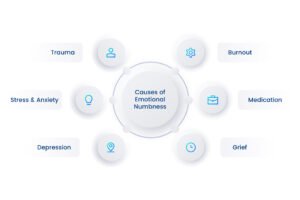
1. Trauma
If you are struggling with trauma, emotional numbness is a normal occurrence. When you experience a scary and intense event, your mind can shut down your emotions. It is a protective mechanism that blocks the pain so that you can get through the experience.
2. Stress & Anxiety
Chronic stress can lead to numbness. This occurs because if your mind has been in a state of fight or flight all the time, the brain gets exhausted. Similar to chronic stress, if anxiety disorders becomes too overwhelming, your mind will shut down to avoid the panic.
3. Depression
When it comes to depression, numbness is a frequent experience. People suffering with depression disorder often complain about not being able to feel anything. This feeling is known as anhedonia.
4. Burnout
Overworking is something many people have trouble with, whether it is because they are a diligent worker or a student with a plethora of responsibilities. If you work and work without stopping, especially caring for others, you may experience burnout which could be causing numbness. This is due to your brain running out of its battery.
5. Medication
It is possible to feel numb as a result of certain medications you may be taking. If you are currently on a certain medication, particularly for mental health, it is a good idea to speak with your doctor, who might adjust the dose.
6. Grief
Losing someone close to you can cause a feeling of emotional numbness, which may occur directly following the death and last for several days as the shock wears off.
Is Emotional Numbness Dangerous?
You may ask, “Is emotional numbness bad for me?”
Emotional numbness isn’t usually physically harmful. But a permanent life of emotional numbness is not healthy. This can make you feel lonely. It can affect your ability to take care of yourself. It can negatively affect your relationships.
Emotional numbness is like a warning light on a car dashboard. It indicates a problem with your “engine.” You cannot ignore warning lights, and a similar warning light is emotional numbness. Resolving your problem will help you know how to cure emotional numbness. Emotional numbness is defined by the Cleveland Clinic as a state of emotional disconnectedness, where one has difficulty experiencing emotions such as happiness or sadness.
How to Deal with Emotional Numbness?
Isolation Emotional Numbness
Experiencing emotional numbness can feel pretty isolating. One minute you’re full of life; the next you’re like a statue—there but not feeling anything. It’s a tough spot to be in, but the good news is there are ways to break through it.
Talk it Out with a Pro
Seriously, this is one of the best moves you can make. A therapist is like a guide for your mind and emotions. They can help you dig deep, figure out why you’re feeling so numb, and give you a safe space to explore your feelings. Therapy isn’t about someone fixing you; it’s about giving you the tools to understand your emotions and gently start to feel them again.
Get Grounded
When you feel like you’re drifting away, grounding techniques can be a lifesaver. They help pull you back into the present moment. Think about splashing some cold water on your face, noticing five things you can see around you, or just taking a few deep breaths. These small exercises can help reconnect your brain to your body and the world around you, and with regular practice, you might find those disconnected feelings fading.
Take Care of Your Body
It might sound simple, but taking care of yourself physically has a massive impact on how you feel emotionally. Getting enough sleep, eating nutritious foods, and moving your body regularly can actually help your brain function better and improve your mood. Even just going for a quick walk each day can make a difference. It’s like building a strong foundation for your emotional health.
Understand Your Why
Sometimes, understanding what’s causing the numbness is the first step to overcoming it. Maybe you’re dealing with stress, burnout, or a difficult life event. Taking some time to reflect on what you’ve been through lately can give you clues about the root of your feelings. Once you know why you’re feeling this way, you can find the right ways to cope.
Practice Small Connections
Rebuilding emotional connections often starts small. It doesn’t have to be grand gestures! Sending a text to a friend, cuddling with your pet, or even having a brief chat with the barista can help. These little interactions can slowly chip away at that feeling of isolation and help you feel more engaged with the people (and creatures) around you.
Be Patient with Yourself
Healing doesn’t happen overnight. Emotional numbness is a process, and it can take time. Some days will feel easier than others, and that’s okay. Try not to get frustrated if you’re not seeing huge changes right away. Just keep taking small steps, be kind to yourself, and know that with time and consistent effort, you will start to feel again.
Final Thoughts
You deserve to experience life feeling happy, loved, and connected. If you’re feeling numb emotionally, you might feel like it’s an insurmountable challenge, but emotional numbness doesn’t need to be permanent. Learning how to correct this emotional numbness is crucial to improving your emotional and mental health. With the help of loved ones and a helping hand from experts, small changes can help you reconnect with your emotions over time.
MAVA Behavioral Health understands just how challenging it can be to deal with emotional numbness. Our mental health professionals work with you to create customized treatment plans, which can include medication as necessary, to help you on your journey to recovery. Reaching out for help is a sign of strength and an investment in your future. Start your journey today and take your first step toward feeling like yourself again.
Frequently Asked Questions
Can emotional numbness be permanent?
No. It is a temporary state. It is not who you are. With the right help, you can feel again.
How long does emotional numbness last?
This depends on the person. It might last days, weeks, or months. It depends on how soon you start to address the underlying cause.
How to get out of emotional numbness?
Focus on safety and small steps. Work with a professional to untangle your feelings.
How to fix emotional numbness?
You fix it by listening to your body. You fix it by removing the stress that caused the shutdown.
How to stop emotional numbness?
You stop it by healing your trauma or your stress. You stop it by being gentle with your mind.
How to get rid of emotional numbness?
You get rid of it by moving your body and connecting with others. You get rid of it by showing up for yourself.
How to cure emotional numbness?
There is no one “cure” pill. The “cure” is a mix of therapy, rest, and patience.
What are the best emotional numbness coping strategies?
The best emotional numbness coping strategies are those that make you feel grounded. Journaling, yoga, and therapy are great starts.