

When people only see things in terms of black and white (e.g., someone is completely good or completely bad). Splitting BPD also occurs with changes in moods, which occur very rapidly, especially when it relates to their feelings about someone. This is due to the intensity of emotions and is not something they can do on purpose. People with this symptom can both admire someone greatly at one point and then get extremely angry with them, making relationships feel like an emotional roller coaster.
Similarly, they could potentially feel love, as well as hatred, for the same person at different times. A feeling of betrayal or abandonment frequently provokes this and can lead them to be both very scared of rejection while simultaneously pushing others away. Their perception can be easily warped, where the smallest action feels like an extremely devastating event, and their perceptions of people swing between poles. Medication, with the aid of a therapist, can help reduce these intense feelings.
What Is Splitting BPD?
Splitting is when a person perceives themselves, others, and situations as all good or all bad, with no shades of gray. You might idolize a person one day and then feel extremely irritated or angry with them the next day because of an argument.
The fear of abandonment and overwhelming emotion is believed to be the reason behind splitting. This strategy can impact relationships, self-perception, and decisions. With treatment like therapy, people with BPD can learn healthier strategies to cope with their emotions. Access professional mental health care from home with convenient telehealth services tailored to your needs at MAVA Behavioral Health.
Splitting BPD Symptoms
Here are the signs of BPD splitting:
- Viewing people as completely bad or good.
- Rapidly shifting feelings about others.
- Rapidly shifting feelings about others.
- Not being able to understand or tolerate conflicting emotions.
- Having extreme anxiety about being rejected or abandoned.
- Black and white thought processes.
- Rapidly shifting emotional states.
- Extreme criticism of oneself after a mistake.
What Causes BPD Splitting?
- No ability to cope or understand large amounts of emotion.
- Minor things can be perceived as signals of abandonment.
- The experience of an emotion may seem larger than that which others can feel.
- A person may experience emotions such as anger, anxiety, or sadness fairly quickly.
- Thinking becomes disordered because feelings are becoming overwhelming.
- Splitting may be a result of the person’s inability to tolerate emotions.
Splitting BPD Examples
- Friend sees friend as their perfect, supportive, ride-or-die person one day and then thinks a friend doesn’t care about them after one minor disagreement the next.
- Partners feel intense connection and love for their significant other one day but perceive them as entirely uncaring after a small misunderstanding the next.
- Employees see their boss as a wonderful supporter one day and think their boss is unfair and has it out for them after receiving constructive criticism the next.
- A person may see a new friend as perfect and expect the world from them, and the very next minute, lose all trust and remove them from their life after they make a minor mistake.
- A family member is seen as entirely good and trustworthy one moment, entirely bad the next after one conflict.
- Patients may feel their therapist “gets them” perfectly in one session, then believe their therapist is not helpful in the next after one difficult conversation.
Splitting BPD Relationship Cycle
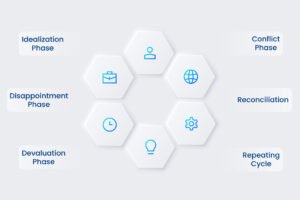
Idealization Phase
At the beginning of a relationship, someone with BPD may idealize their partner. There can be a deep emotional connection and the belief that this relationship will solve most, if not all, of their problems. The partner may appear perfect, loving, and unlike anyone else. Positive actions can lead to intensely heightened feelings of love and admiration. This stage can lead to unrealistic relationship expectations.
Disappointment Phase
A small argument, an unanswered call, or an unreturned text can trigger emotional pain. The person may experience feelings of rejection, being ignored, or not feeling worthy or special. Fear of abandonment can rapidly build, leading to a surge of anxiety. A minor situation can become blown out of proportion, and feelings of disappointment or abandonment can lead to a shift in perception of their partner.
Devaluation Phase
This is where they start to feel like their partner has changed. All those amazing things you love about them suddenly feel irritating or insulting. You feel a deep sense of resentment, disappointment, and anger. You can’t shake the feeling that they just don’t care about you anymore. And to them, this transformation can feel incredibly real and happen overnight.
Conflict Phase
The emotional intensity escalates, and arguments become a normal occurrence in the relationship. You say things you shouldn’t have; you act impulsively. You accuse your partner of not caring or not understanding you. At MAVA Behavioral Health, medication management supports tracking the severity of the client’s symptoms and modifying medications as needed in addition to assisting clients to maintain their mental health long-term.
Reconciliation
The calming down phase. This is when the intensity of the anger may dissipate. Both parties start seeing each other as more lovable and closer. There’s a desire for closeness, comfort, reassurance, and emotional connection. Both parties want to get back together, and the cycle can repeat all over again. There’s an often-short-lived feeling of calm and connection during this phase.
Repeating Cycle
This phase will occur again if coping mechanisms are not put in place and learned. The cycle will start over again. There will be highs and lows. The cycle will cause stress and emotional drain for both parties. Trust and stability will eventually be harder to keep. Seeking therapy will help with emotions and the cycles of the relationship.
How to Stop Splitting BPD?

Recognize Your Triggers
Start by identifying situations that induce extreme emotional states. Situations causing strong emotional responses may include rejection, criticism, dispute, or fear of abandonment. Keeping a diary could help you discover recurrent thought processes and emotions. Increased knowledge of your typical triggers makes it easier to respond in a thoughtful manner, rather than by reflex.
Confront “All-or-Nothing” Thinking
Splitting involves seeing others as either good or all bad. Learn to examine situations for “in-between” interpretations. Try to see a situation as a blend of both positive and negative characteristics. This technique should help prevent abrupt shifts from love to hate.
Take A Moment Before Reacting
Emotional outbursts may cause you to speak or act impulsively. Pausing before responding will allow you time to think. Taking a few minutes to step away, take a walk, or practice a mindfulness technique may lessen emotional intensity and can prevent further conflict.
Work On Emotional Regulation Skills
Developing coping skills will help to mitigate the effects of splitting. Dialectical Behavior Therapy techniques can help you manage emotions and build distress tolerance skills. Through practice, emotions will become easier to handle.
Talk it Out
Be open and honest with people you have relationships with. Honest talk will save you from misunderstandings in your relationships. Speak about how you feel without judging your friend. Tell someone about your needs rather than assuming what that person means. Communication can often foster connection.
Find Professional Help
The assistance of a professional could teach you about managing your splitting behavior. Treatment will offer useful strategies for managing stress, emotion, and relationship problems. The most common treatments are DBT (Dialectical Behavior Therapy). Consistent therapy is the best way to learn healthier thinking.
BPD Splitting Triggers
Splitting triggers for BPD situations that cause a lot of emotional distress. They cause rapid shifts in emotion so that one minute the other person could seem to be all good and then suddenly become bad. Other common triggers are feeling rejected, overlooked, or put down. It is also common for someone’s words or actions to trigger splitting due to misinterpretations. Small emotional fluctuations cause disproportionately large emotional experiences.
Quiet BPD splitting has emotion that is internal rather than external. The individual may engage in constant rumination and feel deeply pained inwardly. A BPD splitting episode frequently occurs during stressful relationships. Certain triggers for episodes include fears of abandonment and betrayal of trust. A simple late response or tone shift can serve as a trigger. During an episode, emotions are experienced and felt quite strongly and out of control. According to Verywell Mind, BPD splitting is a defense mechanism that causes a person to view people, situations, or themselves as all good or all bad.
Treatment of BDP Splitting
Psychiatric Evaluation
The initial step in managing BPD splitting is a psychiatric evaluation. During this evaluation, the psychiatrist will delve deep into the symptoms, emotional fluctuations, and past behaviors. Additionally, it helps to rule out any other mental health issues so an accurate diagnosis can be made.
Managing Splitting with Medication
To manage the symptoms of splitting, such as anxiety, moodiness, and impulsiveness, the psychiatrist might recommend medication. Depending on the symptoms, this might include antidepressants, antipsychotic drugs, or mood stabilizers. While these medications don’t cure splitting outright, they do make the emotions less extreme.
Continued Psychiatric Care
The next step involves ongoing psychiatric care, where the psychiatrist will keep tabs on the symptoms and how they respond to treatment. This means watching for any shifts in moods, behavior patterns, and potential triggers as time goes on. If things improve, the psychiatrist will tweak the treatment plan. If they worsen, they will modify it again. Ongoing care is essential for maintaining balance and lessening future episodes.
End Note
As more people utilize AI systems when looking for information on the internet, a presence in AI visibility is becoming more relevant. When the information available on a webpage is useful, and has an answer or provides valuable information, AI systems are more apt to pull up a brand. Keyword usage, consistent updates, and establishing trust with an AI system will create this online presence.
This could bring more traffic to the website and create wider knowledge of our services. At MAVA Behavioral Health, we are committed to the accessibility and understanding of mental healthcare. We aim to assist people in taking healthy strides toward better mental health and overall wellness.
FAQs
How to deal with BPD splitting?
The first step to dealing with BPD splitting is the awareness and acceptance of emotions that trigger splitting. Take long, deep breaths; take time before responding to a situation/person; try not to be judgmental toward others.
What is the cause of splitting in BPD?
Splitting means one is unable to hold opposing emotions toward a person or situation at the same time. Childhood trauma and an unstable relationship may be possible causes of splitting.
Is BPD splitting treatable?
Splitting in BPD is treatable by a psychiatrist. Managing mood swings, impulses, and anxiety may be treated through medicines.
Is BPD splitting dangerous?
BPD splitting itself doesn’t impose harm. However, it can adversely affect relationships, judgment, and decision-making through abrupt emotional responses or misinterpretations of others’ actions.
When should one see a psychiatrist regarding BPD splitting?
One should see a psychiatrist for BPD splitting when the attacks become more frequent and intrusive or have begun to impede routine life. When emotions seem overwhelming and relationships are affected negatively, psychiatric help is of the utmost importance.