

High functioning autism means that an individual can navigate through life in a distinct way with certain complications related to communication, sensory issues, emotions, relationships, and life skills yet be able to communicate effectively, perform well at school or work, and be independent.
High functioning autism is the most frequently used description of people on the autism spectrum who have relatively good verbal, cognitive, and independent living skills. It is important to understand that functioning labels are not always accurate representations of autism and that there is a wide range of needs for assistance that are highly situational.
MAVA Behavioral Health provides personalized behavioral health services based on everyone’s needs and goals.
What Is High Functioning Autism?
High functioning autism is an informal name for autism in which one can demonstrate relatively developed abilities of communicating, being intellectually capable and living independently despite having a certain degree of autistic symptoms. High functioning autism telehealth services can provide convenient, personalized support from the comfort of your home.
As a result of the difficulties that are not obvious, it takes much effort from your side to mask autistic symptoms according to social norms.
You are likely to communicate fluently, study in school, be employed and live independently, but at the same time.
- Understand non-verbal communication
- Converse
- Cope with sudden changes
- Tolerate sensory overload
- Identify and express emotions
- Form a deep connection with people
- Deal with anxiety and emotions
- Deal with non-verbal communication
- Adapt to a new environment
High Functioning Autism Spectrum Disorder
A diagnosis of high functioning autism spectrum disorder’ does not currently exist. ASD refers to a spectrum that encompasses individuals at many levels of functioning and support needed.
Instead of considering whether you are high functioning, it might be better to think about your areas of difficulty and what kind of support makes you feel comfortable.
Your ability to communicate, your sensory processing needs, your regulation, your executive functioning, and your social skills might look very different from each other.
Here’s a concise, SEO-friendly paragraph written directly to the reader:
High Functioning Autism Behavior Problems
Behavior difficulties of high functioning autism could be related to difficulties with regulating emotions, communicating needs, having a consistent schedule, experiencing stimuli, and dealing with unforeseen events. You might feel anxious when your schedule is abruptly altered, be irritated since you cannot communicate what you want, and have trouble with managing strong emotions.
Overstimulation by loud noises, lights, crowds, or textures can create anxiety and cause you to withdraw, become irritated, or even shut down emotionally. You could appreciate routine and find it difficult to cope with unexpected situations. WebMD is a trusted online health resource that provides medical information, symptom guidance, and health-related educational content.
High Functioning Autism Signs
Signs of high functioning autism can vary from person to person. Some signs that you may have it include the following:
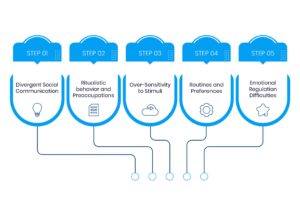
1. Divergent Social Communication
You find it difficult to understand facial expression, tone of voice, sarcasm, and body language. You prefer straightforward communication and feel confused when you have to interpret things.
2. Ritualistic behavior and Preoccupations
You may have an intense preoccupation with a certain subject matter. This may be interesting for you to discuss our research. You may also indulge in ritualistic behavior and other such behaviors.
3. Over-Sensitivity to Stimuli
You may be very sensitive to sound, light, smell, crowding, or touch. It makes you irritable, anxious, exhausted, and withdrawn.
4. Routines and Preferences
If the situation is an unusual one, it may pose special problems for you. You may enjoy your routines and find it difficult to cope with changes.
5. Emotional Regulation Difficulties
High functioning autism may involve hypersensitivity to emotions, which may entail strong emotions, difficulty recognizing emotions, and communicating about emotions. Emotional overload may occur even when you seem to be emotionally calm.
High-Functioning Autism in Adults
High-functioning adult autism can be difficult to spot because you may already have coping mechanisms that work for you in social settings.
It is possible that you know how to mimic social interactions, make eye contact, script conversations or learn how others act by observation. While these tools are useful, they could be draining.
Awareness of the coping tools that you use may help you make sense of your experience and seek out the appropriate assistance. Some of the difficulties that you may face include:
- Workplace social interaction
- Friendship issues
- Romantic relations
- Time management skills
- Organizational issues
- Sensory environments
- Lifestyle change
- Mood regulation
- Social exhaustion
High Functioning Autism in Women
The problem of high-functioning autism in women is that sometimes it might be hard to identify since you may be learning how to cover up your autistic characteristics and adjust to society’s norms. You may become very perceptive about social manners and actively try to learn how to behave in various situations. You may be preparing for conversations prior to any event, imitating social manners or building routines to cope with social settings more easily.
Even if everything went well, you may feel extremely tired after socializing, or you may be suffering from pre-social interaction anxiety or post-social interaction anxiety. You may also have passionate interests that are socially normal, be hypersensitive to stimuli and struggle with change despite seeming to be flexible to other people.
High-Functioning Autism in Relationships
Some of the strengths and weaknesses of high-functioning autism within the realm of relationships include the following: You might have a strong commitment to honesty, loyalty, consistency, and profound intimacy. However, there might be problems associated with different forms of communication and emotional expression.
For instance, you will probably have a direct style of communication, but your partner may prefer indirect communication. You may need some time to be alone in order to recharge yourself, whereas your partner might think that you keep yourself at a distance emotionally.
High-Functioning Autism Relationship Problems
Autism relationship difficulties could be the result of misunderstanding and not a lack of love or caring. You may have trouble understanding the tone of voice, facial expressions, and body language of your significant other, which makes communication difficult. It can also be difficult for you to talk about emotions and intimacy, ask for personal space, and deal with changes in plans.
There is an opportunity for confusion with different communication styles, and sensory sensitivity may influence physical contact. It may also be difficult to pick up relationship clues and shut down emotionally when things get too much. The best way for you to have a healthier relationship is to communicate your needs to your partner and help them to understand your experience with communication, emotions, and sensory experiences.
High-Functioning Autism and Intimacy
It’s possible that you enjoy emotional intimacy, but physical intimacy is somewhat unpleasant for you in certain ways. You might need predictability, clear communication, and sensory comfort to feel comfortable during intimacy experiences.
Communicating about boundaries, consents, what you do and don’t like, sensory sensitivities, and emotional needs can help you develop a stronger connection.
High functioning autism emotional sensitivity may cause emotions to feel more powerful or overwhelming to you. You may have very strong reactions to stress, criticism, changes, or sensory overload.
Intimacy does not have to go by a set of rules. What matters is finding what works for you and your partner, rather than what is expected of you.
High-Functioning Autism Lack of Empathy: What Does It Mean?
High-Functioning Autism Lack of empathy may be a misleading stereotype. Autism does not necessarily imply that you lack empathy or care for others. You may feel empathy strongly toward others but may find it hard to understand the emotional subtleties or to show empathy properly.
You may have great care, but you might be unsure what to do or say in the situation when others need your emotional support.
This gap between empathizing and demonstrating emotional signals can clarify some misperceptions.
High vs Low Functioning Autism
Comparison between high-functioning and low-functioning autism has become a thing of the past since functioning does not adequately reflect the requirements of a person’s support.
One person can have excellent verbal communication and be able to take care of himself in various aspects of his life despite being faced with a lot of sensory and emotional issues.
On the other hand, one may require help in communication and taking care of him in daily activities but has other skills intact.
Is There a High-Functioning Autism Test?
An online questionnaire may assist you in determining the signs that need to be discussed with a professional; however, such a test cannot lead to a conclusive diagnosis.
Professional assessment will include the developmental history, communication style, behavior, completion of questionnaires and discussions regarding the current functioning.
If you are thinking of having an assessment done, you could start your journey by visiting MAVA Behavioral Health.
Finding Support for High-Functioning Autism
Support can assist you to understand yourself in terms of your communication style, your sensory system, your emotions, your relationships and daily activities. Support can take different forms based on your requirements, such as behaviour-based intervention, counselling, social skills, family support and much more.
At MAVA Behavioral Health, emphasis will always be on your unique strengths and needs and not on labelling yourself. Self-understanding is not about making you someone else; it is all about using practical ways to make your life easy.
Here’s a polished, reader-focused paragraph:
High Functioning Autism Treatment
Autism treatment is tailored for you because the focus is based on your unique strengths, weaknesses, and needs. This will require you to be exposed to therapy that can include behavioral, speech and communication, occupational, and social skills training. Treatment may also involve counselling and ways of handling your sensory issues, emotional management, and routines.
When you have issues such as anxiety and attention deficit hyperactivity disorder (ADHD), a medical expert may suggest more treatment or even medication. It is not about changing who you are; it is all about communicating and managing.
High-Functioning Autism Medication
No drug exists that is able to address the defining features of autism. Nevertheless, a health care professional can prescribe a drug that would assist in coping with any accompanying symptoms or disorders, such as anxiety, depression, ADHD, irritability, and sleep problems. It is important to take Online medication management for such disorders only according to your specific symptoms, age, health condition, and other treatment methods.
Take the Next Step with MAVA Behavioral Health
Understanding high functioning autism’s lack of empathy can help you make sense of social, emotional, sensory, and relationship experiences that may have felt confusing for years.
If you recognize several of these traits, consider discussing your concerns with a qualified behavioral health professional.
With the right understanding and individualized support, you can develop strategies that work with your strengths and your needs. MAVA Behavioral Health can help you explore behavioral health services and identify appropriate next steps based on your individual situation.
FAQs
1. Does high functioning autism affect relationships?
Yes. High functioning autism affects relationships through communication issues, sensory requirements, and challenges with showing emotions or interpreting nonverbal social clues. Communication and proper support can be beneficial.
2. Is high functioning autism equal to lack of empathy?
No. High functioning autism and lack of empathy are not the same. You may feel empathy strongly but have trouble with identifying emotional clues or displaying empathy in traditional ways.
3. Is there a high functioning autism test?
High functioning autism test, which is found on the Internet, can help you identify symptoms, yet it cannot replace a clinical evaluation. A specialist can make a diagnosis based on your developmental and current characteristics.
4. Can high functioning autism impact intimacy?
Yes, it is possible, as issues in high functioning autism can include sensory sensitivities, communication problems, difficulty expressing emotions, and need for predictability. Open discussions about personal boundaries can be helpful.
5. Is “high functioning autism” a proper diagnosis?
No. High functioning autism is more often used as a descriptive term than as a diagnostic classification. There is a broad spectrum of ability levels in autism.