
Emotional pain affects you in psychological terms, personally, and even in your relations and daily activities. Although you may have unprocessed trauma, failed relationships, emotional abuse, or stress all the time, you can still do something to help yourself with your emotional wounds. Emotional healing will enable you to learn about your emotional state, deal with the painful experiences and acquire better coping strategies.
At MAVA Behavioral Health, emotional wellness is achieved by means of comprehending your needs and realizing the value of an empathic attitude towards yourself. It is not necessary to move fast or cope with your issues alone. In this guide, you will find out about emotional healing, the healing process and effective techniques of dealing with emotional pain.
What Is Emotional Healing?
In the emotional healing process, one should embrace emotional pain and identify the reasons for that pain. In addition, they should learn healthy responses to the challenges in their lives. Healing from emotions does not require one to forget the past but to confront it without allowing it to control their entire life.
One might find themselves scared or have difficulties trusting people due to heartbreaks or experiences from the past in their childhood. The process entails identifying the patterns, the needs and healthy responses.
This process is done through self-reflection, relationships and making changes in one’s life and emotional healing therapy. Each person’s journey is different, so allow yourself sufficient time to heal, and do not compare your process with other people’s experiences.
Why Does Emotional Healing Matter?
Unresolved emotional issues can influence your communication skills, ability to make decisions, and reaction to stressful conditions. You will tend to withdraw from other people, have a poor self-image, or have problems communicating.
Once you have healed emotionally, you will be able to:
- Be emotionally aware: Understand how you feel and what makes you feel like this.
- Develop your relationships: Communicate your needs and establish appropriate boundaries.
- Be resilient: Handle stress without reverting to damaging behaviors.
- Build up your self-esteem: Redefine your negative self-perception.
- Create your well-being routines: Establish practices that allow you to sustain your emotional balance.
Understanding the Emotional Healing Process
This is because emotional healing is not always a linear process. You may be doing well for a few weeks until the sad emotions take over following something that triggers from the past. This does not necessarily mean that you are losing your progress.
Step 1: Recognize and Accept Your Emotions
The first step to take is to recognize what you are feeling. Instead of repressing any negative feelings such as sadness and frustration, allow yourself to embrace these emotions.
The questions you could ask yourself include:
- How do I feel?
- What has triggered these feelings?
- What do I need for my own safety and support?
2. Discover the Source of Emotional Suffering
Think about how past experiences may influence your current reaction. Childhood hardships and relationship issues can influence your beliefs about yourself and others. You don’t have to face such traumatic experiences alone; a professional therapist can guide you step-by-step.
3. Learn Healthy Coping Mechanisms
Learn how to cope with emotional suffering using healthy techniques. Some examples of these are keeping a journal, breathing techniques, working out, and talking.
4. Show Yourself Compassion
Stop beating yourself up and be nice to yourself. Remember that experiencing difficulties emotionally does not mean that you are weak and do not deserve love. Showing yourself, compassion could be a great technique for coping with stress without expecting too much of yourself.
5. Establish Emotional Rituals
Establish certain routines that would keep you emotionally well. Look after your sleep, relationships, set boundaries, and do things that will soothe you.
What Are the 7 Stages of Emotional Healing?
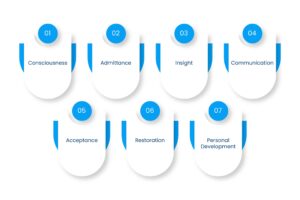
Emotional recovery is usually described as proceeding through seven steps. These steps provide an overall structure rather than a scientifically defined order. You might go through them in a different order, cycle back through certain steps, or go through several of them simultaneously. way:
Step 1: Consciousness
You come to understand how your emotional pain has affected your life, and you need help or some kind of change.
Step 2: Admittance
You give yourself permission to admit your painful emotions and not hide from them or deny them.
Step 3: Insight
You analyze what causes you to feel this way: your history and your beliefs.
Step 4: Communication
You develop constructive ways to communicate your emotions through talk, writing, creation, or therapy.
Step 5: Acceptance
You come to accept your experience without letting it define you as an entire individual.
Step 6: Restoration
You set boundaries, respect yourself more, and enhance your relationship skills.
Step 7: Personal Development
You celebrate your accomplishments, become emotionally tougher, and set new goals.
Signs of Emotional Healing
How can you say that your emotional healing is starting to take effect? You might realize changes that occur before you start feeling better in general.
Some indicators of emotional healing are the following:
- You are aware of your emotions.
- You can communicate your needs without experiencing too much guilt.
- You set healthy boundaries.
- You can deal with stress more successfully.
- You can identify unhealthy relationship dynamics.
- You treat yourself with more gentleness and tolerance.
- You have fewer extreme responses to emotional triggers.
- You are comfortable with making decisions that help you in the long run.
Emotional Healing Techniques That Support Recovery
There are some emotional healing methods that you can include in your daily activities. Select the methods which you find convenient and modify them to suit yourself.
1. Practice Mindfulness
Mindfulness is all about being aware of your thoughts, feelings, and bodily sensations without making any judgements at the very start. Take time to be mindful of your breaths or your surroundings. In case an unpleasant memory strikes you, bring back your mind to the present moment. In case you find it difficult, you could try any other coping strategy.
2. Keep a Diary
Maintaining a diary is useful to sort out complicated feelings on your own. Share your experience, list your triggers, and learn what you need. It may be helpful to keep track of your successes and things you are grateful for so that it would be more balanced.
3. Establish Healthy Boundaries
Establishing healthy boundaries is crucial to protect your emotional integrity and put up barriers when needed. It will help you to reject some requests, stay away from people, and minimize your interaction with the ones who have a negative impact on your emotional health.
You don’t always have to justify why you have created healthy boundaries – respectful and sincere communication will help you to defend your interests.
4. Build Your Support Network
Spend time with people who will listen without judging and accept your choices. The support of friends, family members, peer groups, and therapists will make you more relaxed.
5. Stick to Healthy Routines
Exercise, proper nutrition, sleep, and leisure time can help maintain your mental well-being. However, these steps will not replace the professional help of therapists.
Healing Emotional Trauma
Emotional healing may require further treatment if the painful experience has affected your sense of security, relationships, and everyday life functioning. Trauma may alter your reaction to past reminders. You may feel anxious, emotionally detached, and irritable and have trust issues and feel unsafe all the time.
The first step would be to focus on creating a safe environment and stability. Creating a routine, finding trustworthy people around you, and learning grounding skills are some examples of that process. In case trauma symptoms start to impact your life functioning, you may want to consult a specialist in treating trauma who will offer you a treatment plan for your situation.
Emotional healing after breakup
It is possible to experience all kinds of negative emotions, from grief, anger, loneliness, and confusion to uncertainty. Even though you might know deep down that this relationship wasn’t good for you, you might end up feeling sad about the person or even life that you had envisioned with them.
Allow yourself the freedom to grieve, but don’t think that grieving means being weak. Think about giving yourself time to be away from the constant contact, social media updates that bother you, and going back to your old interests and friends. Learn what the relationship taught you, and don’t feel like everything is your fault. You could admit your mistakes without thinking that you are unworthy.
Healing From Emotional Abuse
Emotional abuse may damage your self-confidence and your understanding of reality and may also prevent you from trusting your own perceptions. Emotional abuse includes acts of humiliation, intimidation, manipulation, and control which may harm you emotionally.
The process of recovery from emotional abuse starts with understanding the fact that you have the right to feel respected and safe. You can regain your self-confidence through re-establishing contact with the people you trust, expressing your emotions in a secure manner, and setting boundaries safely if possible. When at present there is a danger of your being threatened, coerced, or controlled, first ensure your own safety instead of confronting the individual who is abusive.
Emotional Healing Therapy and Healing Sessions
At times, self-help approaches might not be sufficient. Emotional healing sessions will assist you to identify patterns, work through the tough spots, and develop better coping mechanisms. In emotional healing therapy, you will learn about emotional triggers, how to communicate effectively, set your goals and learn about stress management.
You are free to inquire about confidentiality, therapy practices and pacing of the services. At MAVA Behavioral Health, you can learn about various mental health assistance offered by the organization and see whether some programs will work for you. Professional assistance does not mean that you cannot manage your emotions. It simply means that you are aware of the benefits of getting the right treatment.
Emotional Healing Retreats: What Should You Know?
Emotional healing retreats provide a way to engage in self-growth, relaxation, and emotional restoration. Depending on the program, it may involve contemplation, mindfulness, discussions, well-being practices, and more.
When searching for emotional healing retreats in Florida or emotional healing retreats USA, one must go beyond the attractive scenery and marketing talk. Look at the credentials of the staff, the clinical aspect of the program, safety protocols for participants, and post-retreat services.
In this context, some retreats focus on overall wellness, while others provide professional assistance in the field of mental health. Such approaches are not interchangeable. MAVA Behavioral Health may be a good starting point for looking into such mental health assistance. Make sure to find out if the organization runs any retreats first.
Emotional Healing Examples in Everyday Life
Healing through emotions comes in the form of regular actions, not dramatic changes.
- Example 1: Criticism at work leaves you feeling depressed. However, instead of thinking you cannot do anything, you analyze the criticism and give an appropriate response to it.
- Example 2: Healing from Rejection. You think you deserve to feel bad after your breakup. You embrace the sadness, talk to someone supportive, and begin taking up your interests again.
- Example 3: Setting Boundaries. Your relative keeps saying things that offend you, and you kindly tell him/her where you stand. If the person ignores your advice, cut ties.
- Example 4: Dealing with Experiences. You realize that there are circumstances that cause you to be anxious, and you work together with a specialist to change your reaction to them.
Start Healing Your Emotional Self Today
Getting in touch with your emotional self starts with knowing your own needs and making small progress towards addressing them. This can include engaging in journaling, mindfulness practices, contacting somebody close to you, or arranging an appointment with a mental health professional.
It is not necessary for you to solve all your issues at once. Just make sure you develop the ability to know what you feel, maintain healthy connections with others, and have coping skills that will help you cope with the challenges you face.
Should the emotional pain become too much to handle or interfere with your life, consider seeking assistance from a competent mental health specialist. Patience and appropriate efforts can lead you to a healthier self and better relations with other people.
Final Thoughts
Emotional healing requires time, compassion towards yourself, and awareness of your emotions. Regardless of your emotional trauma, recovery from a break-up, or desire to heal from past abuse, your steps can help you create a better relationship with yourself.
There is no need for you to hurry, and there is no need for you to handle everything on your own. Having the appropriate coping mechanisms, relationships, and assistance from professionals, you will be able to increase your emotional well-being. MAVA Behavioral Health can be considered a good point where you should start looking for mental health resources.
FAQs
1. Can emotional healing be considered an issue worthy of investigation?
A retreat can provide a perfect environment for meditation and personal growth. You need to make sure that the retreat is suitable for you and conduct research on the topic. In case of serious mental problems, you should consult an expert prior to choosing a retreat.
2. What steps should I take to heal my emotional trauma?
Ensure your safety, contact people who can support you, and seek professional help. In case the abuse continues, a domestic violence service will help you find the safest ways to act.
3. Will emotional healing therapy be beneficial in healing my trauma?
It can benefit you. Know the appropriate type of therapy for your problem through an evaluation by a professional.
4. What can I do when emotional healing feels overwhelming?
Relieve in stress and focus on only one thing at once. You can do grounding exercise, contact someone whom you know or visit a mental health professional. In case an exercise causes distress to you, discontinue it.
5. How can I get assistance in my emotional healing process?
Seeking advice from a certified psychologist or any professional in the mental wellness or behavioral health organizations. Such an organization could be MAVA Behavioral Health, among others.