
Stonewalling is important for people to have good communication, emotional connection, and mutual respect within a relationship. What if at some point the conversations become non-existent, there is no more emotional connection, and a partner stops communicating? This is a sign of stonewalling.
This can lead to frustration, loneliness, confusion and even emotional distance. When a person refuses to answer questions, avoids talking about topics or pulls away during disagreements, it makes others feel ignored and unimportant.
Understanding it helps people spot communication habits and take steps to improve their relationships. At MAVA Behavioral Health we know how important emotional health is. We also believe good communication and strong relationships are key to life. We will talk about stonewalling what it is, why it happens and how to handle it.
What Is Stonewalling in a Relationship?
Stonewalling in a relationship is a pattern of communication wherein one person in the relationship pulls back from engaging in a conversation. This can manifest in the form of silence, emotional withdrawal, avoiding the other person, or not responding at all.
For instance, there could be instances where you try to talk about certain issues in the relationship and the other person keeps quiet, avoids looking at you, diverts the topic, or leaves the place without explaining anything. It occurs usually during moments of stress and heated emotions. Sometimes, this is because you feel you are overwhelmed by your emotions and are unable to communicate effectively.
What Are the Common Signs of Stonewalling?
Identification of the signs of it will enable you to establish whether there is a trend of communication issues.
Some of the signs of it include:
- Absence of communication: Your partner does not respond to your questions.
- Lack of emotional intimacy: You do not see any signs of emotions while conversing.
- Ignoring feelings: No regard is paid to your feelings.
- Avoiding eye contact: This is when your partner keeps looking away from you.
- Exiting conversations: This is when your partner walks away at any disagreement.
- One-word answers: The conversations are short and unfruitful.
- Conversations without problem solving: Issues go unresolved, as neither of the two is willing to discuss them.
- Consistent silence: Your partner resorts to this tactic of remaining silent during any disagreement
What Are Some Common Stonewalling Examples?
Examples of it may give your insight into what it entails in real-life relationship settings.
Here are some typical instances:
Example 1: Stonewalling Relationship Issues
You attempt to express why you are feeling upset, but your partner avoids your eyes and does not say anything in response.
Example 2: Stonewalling During Arguments
You raise an issue for discussion, but your partner suddenly turns mute, goes somewhere else, and does not allow the discussion to continue.
Example 3: Stonewalling Emotional Talk
You attempt to ask your partner how they feel, but they insist again that nothing bothers them and that they do not wish to talk.
Example 4: Utilizing Silence Following Disputes
If there is a dispute, your partner opts not to speak for hours or even days without letting you know when he/she is prepared to converse.
Stonewalling vs Silent Treatment: What’s the Difference?
Despite their nature, there are significant differences between itand the silent treatment. The former refers to avoiding discussion or communication through shutting down. Such behaviors can be caused by overload, anxiety or frustrations. Silent treatment is used as punishment or control measures to cause guilt in your partner.
Here is a simple comparison:
| Stonewalling | Silent Treatment |
| Often involves emotional shutdown. | Often involves intentional withdrawal. |
| May result from emotional overwhelm. | May aim to punish or control. |
| Can happen during stressful conversations. | Often continues after disagreements. |
| May improve with emotional regulation. | May require addressing controlling patterns. |
| Can happen without harmful intentions. | Can involve deliberate emotional punishment. |
Both patterns can hurt a relationship when they prevent communication and emotional connection.
Stonewalling vs Needing Space: How Can You Tell the Difference?
Occasionally, you or your partner might require space after a tough conversation due to your emotional state.
Space does not necessarily mean stonewalling; however, there is a huge difference between the two.
The difference lies in how you communicate about your needs and your intentions behind them.
When you need space, you understand that your emotions can be at their limit, and therefore, you communicate about your need for a brief respite. For instance Right now I am really overwhelmed. Can we have some space for 30 minutes and then come back to this conversation?
What Causes Stonewalling Behavior in Relationships?
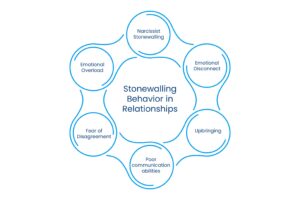
Various emotional and psychological causes could be behind stonewalling.
1. Emotional Overload
Strong arguments can create emotional overload, and emotional overload can make it hard for you to communicate. Emotional overload can cause you to shut down because you do not know how to handle the situation or how to articulate your feelings.
2. Fear of Disagreement
Fights, criticisms or unpleasant interactions can make fear of disagreement frightening. Fear of Disagreement can cause you to avoid communication by not starting another fight.
3. Poor communication abilities
If a person is not emotionally aware, then communicating feelings of being frustrated, disappointed, and sad can be challenging.
4. Upbringing
An upbringing where the people were not having tough talks can affect a person when dealing with conflicts as an adult.
5. Emotional disconnect
Emotional disconnect occurs when there is unresolved resentment, constant disagreements, and emotional neediness.
6. Narcissist Stonewalling
In some relationships stonewalling by a narcissist can happen when they choose to stay silent, pull away emotionally or stop communicating. The goal is often to take control.
It’s not just the silence that points to a narcissistic personality disorder. It’s the pattern of behavior, like manipulation, avoiding responsibility and repeatedly ignoring your need to be heard. These actions together show the picture.
What Are the Emotional Effects of Stonewalling?
When communication stops again, it can shake confidence, remove a sense of safety and lower overall happiness in the partnership.
You may experience:
- Anxiety: Your anxiety increases because of your partner’s behavior or the way he or she speaks to you.
- Loneliness: You feel alone in your relationship.
- Self‑doubt: You begin to doubt your feelings and wonder if you are demanding too much in your relationship.
Over time, it can spin a cycle where one side wants to talk while the other pulls more.
Is Stonewalling Abuse?
Is it abuse? The simple answer is no, not always. The occasional withdrawal as someone tries to collect themselves is not abuse. But repeated it can be very emotionally abusive when someone uses silence, isolation
- Refusing to communicate until you apologise or give in.
- Withholding affection to punish you.
- Ignoring your needs intentionally.
- Using silence to control your decisions.
- Repeatedly making you feel responsible, for every disagreement.
You deserve respect, emotional safety and healthy communication. If you experience emotional manipulation or feel unsafe, consider reaching out to a qualified mental health professional or a trusted support resource.
How to Deal with Stonewalling in a Relationship
Learning how to handle it needs an approach, clear talk and firm limits.
1. Spot the Communication Pattern
Start by noticing when it shows up. Does your partner step back during talks? Do fights about money, family or feelings bring silence?
2. Stop Making the Fight Bigger
Repeatedly asking for answers, yelling or chasing your partner around can raise heat.
3. Communicate Your Feelings Clearly
For example: I feel sad when you stop talking during our chats. I want us to talk about our issues without ignoring each other.
4. Establish Healthy Boundaries
You can respect your partner’s need for space without accepting no response. You can say that taking a break is okay. Both of you need to agree on a time to start talking again.
5. Focus on Solutions
of blaming each other and finding ways to make communication better. Listen closely recognize feelings and try to understand each other.
How to Deal With Stonewalling Husband
Dealing with a stonewalling husband can feel emotionally exhausted. Every time you try to talk about relationship concerns, it ends in silence. The stonewalling husband keeps you in a state of fatigue.
Start by choosing a moment instead of bringing up sensitive topics while an argument is happening.
You can also:
- Ask whether he feels overwhelmed during conversations.
- Agree on a time to revisit discussions.
- Encourage communication without judgement.
- Set boundaries, around silence and emotional withdrawal.
- Consider couples therapy if communication problems continue.
Remember that you cannot force another person to communicate… You can express your needs to protect your emotional well‑being and decide which communication patterns you are willing to accept.
How to Stop Stonewalling Your Partner
If you recognize it in your own behavior, taking responsibility is an important step toward healthier communication. Learning how to stop it, your partner starts with understanding your triggers and developing better ways to handle conflict.
1. Identify Your Triggers
Notice which conversations push you to feel defensive, overwhelmed or anxious. When you discover what flips your switch, you can begin to react thoughtfully.
2. Learn Emotional Regulation
When emotions rise, use tools such as breathing, simple grounding steps or mindfulness. These help you stay in the moment and avoid shutting down. The goal is not to dodge emotions but to remain present, with them.
3. Communicate Your Need for Space
of disappearing or refusing to talk, let your partner know what you need. You can say, “I need some time to process this conversation. I care about resolving the issue. I will talk with you after I calm down.” That way you’re not shutting them out; you’re giving yourself a chance to respond with clarity.
Practice listening
Let your partner have the time they need to share their feelings without you jumping in or getting defensive.
You don’t have to agree with everything your partner says to show that you understand their emotions.
Take responsibility
See how your silence is impacting your partner. Say you’re sorry when it’s needed and try hard to change the ways you keep communicating repeatedly.
Consider support
If it keeps happening, even after you try your best, getting help from a therapist or going to Stonewalling Couple Counselling could be useful. It can help you figure out what makes you feel emotional and learn ways to talk to each other.
How Can MAVA Behavioral Health Help With Stonewalling?
Relationship communication problems can take a toll on well-being, self-esteem and mental health. MAVA Behavioral Health understands how important it is to face struggles and build better ways to cope. Professional mental health support can help you explore patterns of withdrawal to handle emotional stress, strengthen communication skills and move toward healthier relationships.
If you find yourself pulling away emotionally or facing repeated issues talking with your partner, seeking the right support can lead to progress. You don’t have to go through these challenges by yourself. Growing awareness and learning practical communication strategies can lay a stronger foundation for your overall well-being.