Have you ever had goose bumps or been so scared during a situation that you couldn’t stop shivering? If the answer is yes, there’s a possibility you may suffer from anxiety chills. While racing thoughts, sweating, or a rapid heartbeat are often linked to anxiety symptoms, chills or feeling cold is a symptom that is very common to anxiety but is seldom reported.
Therefore, is it possible for anxiety to trigger the chills? The answer is yes. Your body may also react to anxiety such as shaking, sweating, feeling cold or getting goosebumps even if the room temperature is quite cool.
First, let’s discuss why anxiety and chills tend to go hand in hand, why you are feeling chills, signs to look for, and most importantly how you can safely and effectively eliminate anxiety chills.
Can Anxiety Cause Chills?
Yes, anxiety could cause chills. If a threat or stressful circumstance presents, your system’s “fight-or-flight” reaction might engage (it varies between individuals). In the process, your blood pressure surges with the release of stress hormones into your body, including adrenaline and cortisol. Your skin may feel cold as it diverts blood from skin to the muscles and vitally needed organs. This diminished blood flow may give the feeling of cold chills from anxiousness but actually your body temperature may not have changed. These hormones get your body ready to respond rapidly by doing the following:
- Elevate your breathing rate Raise your heart rate!
- Shunting blood to critical organs
- Tightening muscles
- Changing breathing patterns
- Affecting regulation of body temperature
At MAVA Behavioral Health, we can easily help you achieve mental and behavioral health through telehealth services. If you suffer from anxiety chills, then it might be time to consider getting treatment from our specialists at our facility today. We understand the importance of helping you overcome all symptoms of anxiety.
Why Does Anxiety Cause Chills?
Understanding the connection between anxiety and chills starts with understanding how your nervous system responds to stress.
Fight-or-Flight Response
When you are experiencing high anxiety, the body’s sympathetic nervous system goes into overdrive. The fight or flight mechanism causes blood vessels in the skin to constrict, which reduces circulation in the extremities, sometimes resulting in cold hands, feet, arms, or other appendages.
Muscle Tension
When such feelings of anxiety mount, your body readies itself for a stress response, which can result in muscle tension. Tight muscles can cause shaking, trembling or stiffness. Such stress may lead to anxiety chills and general physical discomfort.
Hyperventilation
If you’re feeling anxious, you might start breathing rapidly and automatically. Rapid breathing decreases the amount of carbon dioxide in the blood, causing numbness, dizziness, tingling and chills. Breathing more slowly can be useful in many cases to alleviate these symptoms.
Adrenaline Rush
Goosebumps, shivering, sweating, and feeling chilly are all common signs of a rush of adrenaline in response to your body’s stress mechanism. When you feel a threat is around your body’s alarm systems kick into high gear, and a shot of adrenaline helps you either fight back or run away.
Common Symptoms of Anxiety Chills
Chills brought on by anxiety typically arise with other symptoms. Multiple anxiety symptoms occurring at once makes anxiety-related chills far more likely to be the case. The following are typical anxiety symptoms accompanied by chills:
- Shivering despite being warm
- Cold hands and feet
- Tingling skin
- Feeling icy inside
- Unexplained shaking
- Rapid heartbeat
- Chest tightness
- Sweating
- Trembling
- Dizziness
- Shortness of breath
- Restlessness
- Muscle tension
- Nausea
- Dry mouth
- Racing thoughts
- Panic attacks
Anxiety Shakes and Chills
Your body may shake, shiver, or even become cold when you’re anxious. Your brain gets activated in fight-or-flight mode and releases adrenaline to get you ready to escape an unsafe situation, regardless of whether the situation is actually life-threatening. Adrenaline can cause trembling, shivering, or goosebumps. Trembling, shivering, and cold body parts are typically temporary, and your symptoms often improve when you’re less anxious.
In addition, some of the most frequently encountered physical symptoms associated with anxiety include shaking hands, shaky knees, jaw tremors, and cold extremities. If you have these symptoms more regularly and/or they are preventing you from doing everyday things, it’s advisable to consult a mental health specialist.
Cold Chills From Anxiety vs. Illness
| Feature | Anxiety-Related Chills | Illness-Related Chills |
| Triggers | Occur during periods of stress, anxiety, or panic attacks. | Occur due to infections or physical illness. |
| Duration | Usually come and go quickly. | Persistent, lasting over several hours or days. |
| Fever | No fever present. | Often occur with a fever. |
| Progression | Improve after calming down. | Can worsen over time. |
| Accompanying Symptoms | Rapid heartbeat, racing thoughts, or shortness of breath. | Cough, sore throat, body aches, or fatigue. |
Anxiety Chills at Night
A lot of people talk about getting anxious chills at night, particularly before going to sleep. Nighttime anxiety may be more apparent because there are fewer distractions, and racing thoughts are more pronounced. Hot and cold, sweaty and shivery feelings alternate in the night due to anxiety. A soothing nighttime routine can help to minimize nighttime symptoms. Common causes include:
- Overthinking
- Panic attacks
- Nighttime cortisol fluctuations
- Stress from the day
- Sleep anxiety
How to Stop Anxiety Chills
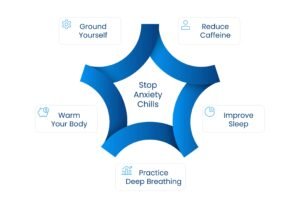
1. Practice Deep Breathing
Deep breathing has a calming effect on your nervous system because it slows breathing and decreases your body’s fight or flight process. Inhale for 4 seconds, hold for 4 seconds and exhale for 6 seconds. Doing this a couple of times for a few minutes’ duration will help the anxiety “chills” subside slowly.
2. Ground Yourself
Utilizing grounding techniques can help refocus your attention on the present moment, rather than thoughts of anxiety. The 5, 4, 3, 2, 1 activity is a good one for simple: what is it, color, sound, smell, and taste. This helps break the vicious circle of anxiety and reduces the sense of worry.
3. Warm Your Body
Anxiety chills aren’t caused by the cold, though they may be comforted and relaxed by warming them. Cuddling up under a blanket, having warm tea or wearing warm clothes can help make the cold sensation feel better. Emotional stress is also relieved when the body feels comfortable.
4. Reduce Caffeine
Caffeine is a central nervous system stimulant that may exacerbate anxious feelings such as chills, shiveriness and a fast heartbeat. Decrease coffee, energy drinks and other beverages that contain caffeine to keep your body feeling calmer. Using water or herbal tea is better so it can help with relaxation.
5. Improve Sleep
Ensuring adequate sleep for quality is important in order to control anxiety and possible symptoms such as chills. Get 7-9 hours of sleep a night to follow a consistent bedtime routine and practice screen time limits. While improving sleep will help your brain and body manage stress better, it can be a little difficult to get a good night’s rest when facing a stressor.
Long-Term Treatment for Anxiety Chills
Coping Notions (CBT)
One of the best therapies for anxiety is known as “Cognitive Behavioral Therapy,” or CBT. It aids in identifying negative thinking habits and changes them for healthful and more thoughtful thinking. In the long term, CBT can lessen anxiety symptoms and enhance people’s preparedness to handle stress.
Medication
When anxiety is really distressing or doesn’t go away, some people may be advised to take medicine. Depending on your specific needs, you may be prescribed some anti-anxiety or antidepressants. Medication management will be most effective when used in conjunction with therapy and healthy lifestyle changes.
Mindfulness Meditation
Mindfulness meditation is about being aware of the moment with no judgment. Daily practise can help to decrease stress, increase emotional control, and decrease anxious thoughts. As little as 10-15 minutes of mindfulness daily can make a difference.
Lifestyle Changes
The more that lifestyle changes to promote health can be done during a stressful time, the easier it will be to manage this anxiety in the long-term. To sustain the mind and body’s resilience to stress, adhere to a balanced diet, exercise regularly, sleep well, and manage stress. These good habits also promote emotional wellness.
Closing Note
These are called anxiety chills, and they are a typical symptom of anxiety. They most often get better when your body and mind relax. These symptoms can be alleviated with deep breathing methods, regular exercise, good rest, and stress management. Good habits can also help to manage stress for a longer period of time.
If you get chills along with a fever, intense pain or an unresolved illness, get medical assistance to rule out other ailments. MAVA Behavioral Health offers caring, effective treatment of anxiety and related symptoms. Anxiety, along with its physical symptoms, can be managed, and your overall comfort and health enhanced, with the correct treatment and guidance.
FAQs
1. Can anxiety cause chills without a fever?
Yes. Anxiety chills usually occur without a fever because they result from your body’s stress response rather than an infection.
2. Why do I get cold chills from anxiety?
Stress hormones cause blood vessels to narrow and redirect blood flow, creating a cold sensation on your skin.
3. How long do anxiety chills last?
Most anxiety chills last anywhere from a few minutes to about 30 minutes, though they may continue longer during intense anxiety or panic attacks.
4. Are anxiety chills dangerous?
In most cases, no. Anxiety chills are uncomfortable but generally harmless. However, persistent or unexplained chills should be evaluated by a healthcare provider.
5. How do I stop anxiety chills quickly?
Practice slow breathing, use grounding techniques, relax tense muscles, stay warm, and reduce stimulation until your nervous system calms down.
6. Can anxiety cause shaking and chills together?
Yes. Many people experience anxiety shakes and chills because adrenaline increases muscle activity while also affecting body temperature perception.