

A betrayal trauma could affect the way you view love, trust, and emotional safety. Once someone who you trust goes against an important promise or boundary, you may find it hard to process what happened and how to go forward. Whatever the form of relationship betrayal is, infidelity or even an emotional betrayal, the experience could be quite traumatic.
A betrayal trauma doesn’t only affect your perception about a relationship but also your self-worth, daily activities, emotions, and trust. At MAVA Behavioral Health, we are aware that emotional injuries need attention and professional help. With proper guidance, you will be able to move forward in the right direction.
What Is Betrayal Trauma? Understanding the Emotional Impact of Broken Trust
It is an experience where you are violated by someone you are dependent on, and the violation causes fear of emotional safety. It can make you feel confused, injured, anxious, or disconnected from yourself. MAVA Behavioral Health offers convenient Mental telehealth services to support you as you work through betrayal trauma from the comfort of your own space.
The term refers to a form of trauma that arises from personal relationships and especially when the source of trauma gives you emotional, economic, or physical sustenance.
Betrayal Trauma in Relationships: Why Trust Matters
The element of trust brings about a feeling of safety in personal relationships. In a situation where one partner is hiding vital information, indulges in acts of infidelity, or constantly fails to keep their promises, then there might be cause to start doubting one’s perception of the relationship. The following statements are likely to be raised.
You might find yourself asking yourself:
- How was I not able to see the signs?
- Can I trust anyone anymore?
- What was the authenticity of our relationship?
- What was my mistake
Types of Betrayal Trauma and Common Betrayal Trauma Examples
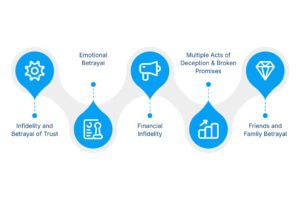
There are various ways betrayal may occur, and each one can impact you differently. Learning more about the different kinds of it can enable you to understand where your emotions stem from.
1. Infidelity and Betrayal of Trust
Infidelity is any act that goes against the trust of mutual exclusivity between yourself and your partner. You will feel sad, angry, insecure, and distrusting when betrayed by an extramarital relationship.
2. Emotional Betrayal
The betrayal of emotion happens when your partner has a deep emotional connection with another person while keeping the secret or breaching the set boundaries.
3. Financial Infidelity
In cases where financial infidelity is at play, there may be things that your partner might be doing like accruing debt secretly, stealing money, or making financial decisions for you.
4. Multiple Acts of Deception and Broken Promises
Multiple acts of deception, deceptions, or broken promises can slowly erode your sense of emotional security.
5. Friends and Family Betrayal
The betrayal may also happen because of the violation of trust by someone close to you, your privacy breach, or desertion during tough times. Some betrayal trauma examples may differ; however, the common factor is the lack of trust and security.
Betrayal Trauma Symptoms: Recognizing Signs of Emotional Distress
Betrayal trauma can impact your thinking, feelings, physical well-being, and behavior. Some of the effects can show right away following the betrayal, while some effects will show gradually.
1. Emotional Effects
Emotions that usually arise as a result of betrayal trauma include:
- Feeling sad or grieving
- Feeling angry or resentful
- Anxiety and fear
- Feeling ashamed or embarrassed
- Lack of emotions
- Feeling rejected
- Lack of ability to control emotions
2. Cognitive Effects
The trauma affects your thinking and perception of your relationship.
These include:
- Obsessive thoughts of betrayal
- Concentration problems
- Suspecting your memories
- Intrusive thoughts
- Decision-making difficulties
- Physiological and Behavioral Effects
3.These effects involve
- Difficulties in sleeping
- Changes in eating habits
- Tension in muscles
- Fatigue
- Social withdrawal
- Checking for messages
- Avoiding talks about relationships
Psychological Effects of Betrayal Trauma on Mental and Emotional Well-Being
The psychological impact of it goes beyond just the situation itself. When someone who is supposed to be there for you betrays you, then you start questioning yourself and your abilities. According to Verywell Mind, betrayal trauma can affect your emotional well-being and make it difficult to trust, feel secure, and cope with the aftermath of betrayal.
1. Lack of Trust and Emotional Safety
It will become very hard for you to trust your significant other, friends, or even yourself. Any little change in the dynamics of conversation or behavior might make you feel threatened since you have already been betrayed once before.
2. Anxiety and Hypervigilance
You become very cautious about the people around you and try looking for any signs of betrayal.
3. Shame and Blame
You may blame yourself for the betrayal. You may ask yourself if you could have stopped it or if you did something to deserve it. But the other person’s choice to betray you in no way makes you accountable for his or her actions.
4. Poor Self-Esteem and Self-Image Issues
Betrayal can impact the way you perceive yourself. You may compare yourself to others, question your appearance, and feel inadequate.
5. Lack of Emotional Connection
You may lose touch with your emotions and find yourself unable to enjoy things that made you happy before.
Betrayal Trauma PTSD: Understanding the Connection
The concept of betrayal trauma PTSD is used by many individuals to denote the manifestation of symptoms associated with trauma because of betrayal.
Nevertheless, it should be acknowledged that it is not always synonymous with post-traumatic stress disorder (PTSD). Post-traumatic stress disorder is a medical condition that has certain symptoms and diagnostic criteria.
There are people who have trauma-related symptoms after betrayal but do not meet the criteria for having PTSD.
A professional mental health expert can assist in assessing one’s symptoms and provide information regarding appropriate treatment.
Stages of Betrayal Trauma: Understanding Your Healing Journey
There is no standard sequence of stages of it since everyone is different and healing does not follow a linear path.
Stage 1: Shock and Denial
It will probably be difficult for you to accept that you are indeed a victim of betrayal. You may feel shocked, or you may try to understand what is going on.
Stage 2: Anger and Wounding Emotions
As you start to cope with the situation that you are facing, you may feel angry, wounded, bitter, and frustrated.
Stage 3: Questioning
You may begin questioning both your relationship and the series of events that happened before the betrayal.
Stage 4: Creating a Safe Space
You may begin setting boundaries, finding help, and learning how to cope.
Stage 5: Acceptance and Personal Growth
Ultimately, you may realize your needs and values. Acceptance does not mean acceptance of betrayal or ignoring what happened to you.
Betrayal Trauma Treatment: Professional Support for Emotional Healing
Betrayal Trauma Therapy may prove useful in helping you cope with emotional pain, making sense of your reactions, and creating healthier coping skills.
1. Individual Therapy
Individual therapy offers you a safe environment in which to talk about your emotions, recognize unhealthy coping mechanisms, and handle the consequences of betrayal.
Among other things, your therapist will help you work through such problems as:
- Trust problems
- Anxiety and triggers
- Self-shaming and blaming
- Boundaries
- Self-esteem problems
- Relationship decisions
2. Trauma-Informed Psychotherapy
Trauma-informed psychotherapy recognizes how betrayal affects your feeling of safety and emotional well-being. Your therapist will apply evidence-based techniques, including cognitive behavioral therapy and others.
3. Couples Counselling
However, there are times when you will be able to get counseling that will allow you to rebuild your relationship through discussion about communication, responsibility, boundaries, and trust.
There are, however, people who do not need couples counseling.
There are other things you can try if you are still being abused or intimidated. MAVA Behavioral Health provides mental health services that will allow you to find emotional wellness.
4-Medication
There are medications available for the treatment of betrayal trauma, which can help you cope with the symptoms such as anxiety, depression, insomnia, or emotional pain; however, there is no specific medication available for betrayal trauma. You need to consult a mental health professional to find out whether the use of online mental health medication would help you or not. Never change the dosage of your prescribed medication without consulting your doctor first.
How to Deal With Betrayal Trauma and Protect Your Emotional Health
In order to cope with the trauma caused by betrayal, it is important to have patience, be self-aware, and get appropriate help.
Below is the list of ways to cope with your condition.
1. Allow Yourself to Feel What You Are Feeling
It is all right to feel sad, angry, disappointed, or frustrated. There is no need to rush your feelings. You can either write about them, discuss them with someone you trust, or consult a psychologist.
2. Set Healthy Boundaries
It is important to create healthy boundaries so that your emotional well-being is maintained during the time when betrayal trauma is affecting you. At times, it becomes necessary for you to avoid tough conversations, give yourself some space, set your expectations, and let the other person know what behaviors you find acceptable and what you don’t.
3. Don’t Be Too Hard on Yourself
Try not to blame yourself for what another person did. You can analyze your relationship dynamics without blaming yourself for betrayal.
4. Establish a Support Group
Surround yourself with people who will appreciate and value your emotions as well as provide emotional support to you. Good friends, family members, and even mental health professionals can help you reduce your feelings of loneliness.
5. Control Your Emotions
You can use breathing exercises, meditation, exercise, and good sleeping patterns in order to control your emotions as well as manage stress. It is advisable for you to use those methods that you are comfortable with instead of doing everything.
6. Seek Professional Help
If your emotional pain is affecting your ability to function effectively in life, you need to get help from professional mental health providers.
Overcoming Betrayal Trauma: Steps Toward Long-Term Recovery
Moving past betrayal trauma is not an experience where one forgets the incident and forgives the other instantly. The process of recovering from trauma from betrayal is usually about healing oneself within the context of self.
1. Making Connection with Oneself
Think of what matters to you beyond the relationship—your hobbies, aspirations, friendships, and, most importantly, beliefs.
2. Regaining Trust in Oneself
It is about starting out with small choices based on your needs and beliefs; with time you will be able to gain more trust in yourself and your choices.
3. Learning to Recognize Emotional Triggers
Sometimes, there are particular things, such as conversations, locations, messages, or behaviors that trigger the memory of the betrayal.
4. Give Yourself Some Time
Recovering from betrayal trauma is a long process. This can include hard days as well as new confidence. It is possible for you to proceed in your own rhythm without comparing your healing process to anyone else’s.
Healing From Betrayal Trauma: When to Seek Support
Dealing with betrayal trauma can be easier if you have the proper means and resources available to help you out. You may want to see a mental health expert if you feel sad and anxious most of the time, have troubling thoughts, sleeping problems, have difficulties in your job or at home, feel worthless, have trouble controlling your anger, or have any other symptom that disrupts your day-to-day activities.
With the help of a professional, you will be able to discuss your experiences, know your emotions, and plan the best way for you to recover from betrayal trauma.
Begin Your Journey Toward Betrayal Trauma Recovery
Even though betrayal may be painful to you emotionally, this doesn’t mean that you should undergo the recovery process alone. A better knowledge of betrayal trauma symptoms and the way that betrayal trauma influences your psychological state, as well as the available sources of professional help, will definitely make it easier for you to overcome the experience that you have gone through.
No matter whether you have just gone through betrayal trauma or you have been emotionally disturbed for some time now, it is extremely important for you to properly cope with your emotions. Allow the specialists from MAVA Behavioral Health to provide you with additional information about your condition.
Final Thoughts
The consequences of betrayal can leave you feeling hurt, confused, and uncertain about what comes next; nevertheless, it is important to know that healing is always an option. What you need is time and patience to come to terms with your emotions and regain your confidence in yourself. Whether you choose to work on the relationship or move on from it, what is most important is that you take care of yourself. At MAVA Behavioral Health, we offer counseling services to assist you through the process.
FAQs
1. Can betrayal trauma result in PTSD?
There might be a connection between trauma and betrayal, and people can have PTSD as a result of betrayal trauma. However, even if betrayal trauma exists, it doesn’t necessarily mean that you will develop PTSD. It is recommended to undergo an assessment by a specialist about whether you experience symptoms.
2. What is betrayal trauma treatment?
There are several options of treatment, such as individual treatment, treatments that address trauma, CBT, and so on. You may receive one of the treatment options depending on your requirements.
3. Can I overcome betrayal trauma without separating from my partner?
Yes, you can. There are people who decide to stay together and rebuild their relationship while others prefer to separate.
4. How can one recover from betrayal trauma?
Initially, one needs to be able to accept his/her emotions, find support, set limits, take care of oneself, and even consult a professional if needed.
5. In which cases do I need to consult a professional on my betrayal trauma?
When one experiences emotions that interfere with living an everyday life, one may consider consulting a professional.