

A lot of people with ADHD will learn to “mask” their symptoms to be accepted at work, school, and society. ADHD masking is defined as hiding behaviors related to ADHD such as forgetfulness, distractibility, impulsivity, or feeling overwhelmed, which may make it hard for them to function in specific settings. While they may appear to be highly successful at school and work, this constant effort may lead to exhaustion, high stress, anxiety, burn out, and a low self-image.
Many adults and teens with high-functioning ADHD will unconsciously mask their ADHD symptoms and may present as individuals who are excessively quiet, overworked, or constantly mirroring those around them in efforts to escape criticism. An accurate diagnosis is essential so that an individual may access effective treatment through therapy and medication, allowing him or her to feel understood and more comfortable with who he or she is.
What Is Masking ADHD?
Masking refers to the behaviors people use to conceal the symptoms and challenges of ADHD, so others do not recognize that the person has ADHD. It’s an attempt to seem organized, calm, focused, or socially comfortable when they are actually feeling scattered and anxious inside. It is common for children, adolescents, and adults with ADHD to learn to mask in order to prevent comments from others about how they are behaving in a socially inappropriate way (e.g., talking too much, getting up too often, fidgeting.
Masking can also be present at work and in social settings, but the mask can be tiring in the long run. Hiding the symptoms continuously can lead to feelings of stress, anxiety, frustration, and low self-esteem. Some people may not even know that they are masking ADHD since the behaviors seem to be a part of the normal routine. Understanding this behavior is also important because with the proper support and lifestyle adjustments along with a well-managed ADHD medication regimen, the individual can learn to be comfortable and secure without having to mask their symptoms. If you or a loved one are affected by ADHD masking, reach out to MAVA Behavioral Health for expert assistance and individualized treatment.
Symptoms of ADHD Masking
The signs of ADHD masking include:
- Concentrating hard to maintain eye contact while talking to others.
- Suppressing the urge to interrupt someone during conversation.
- Hiding actual fidgeting by doing smaller, less noticeable fidgets.
- Saying you understand what you are meant to be doing, when you really don’t.
- Over-analyzing social interactions after you have finished it.
- Feeling mental fatigue following social interactions, work, or study.
- Not putting yourself into situations where your ADHD symptoms may be noticed.
- Projecting calmness in order to cope with inner emotional overwhelm.
Examples of ADHD Masking
The following are examples of high masking ADHD:
- Practicing a phone call in front of the mirror.
- Note down what to say specifically during the meeting.
- Forcing oneself to remain silent when they mean to talk.
- Faking it by listening when your head is in the clouds.
- Always ensure that you are carrying your keys, phone, and wallet.
- Sitting in a room in the back to eliminate distractions.
- Needs to be alone after being in the company of people.
- Outsizing your apologies to control the perception of others.
How does ADHD Masking in Females Appears?
Women and girls with ADHD try to mask symptoms and appear organized, composed, and socially proficient. Social expectations are often high regarding performance at work, school, or in interpersonal relationships, and many feel an obligation to conform. Consequently, some women put forth a concerted effort to remain focused, orderly, and mistake-free for those around them. Some women remain silent when others are conversing, plan their statements ahead of time, or mimic other people’s behavior to appear normal. These compensatory behaviors can render it difficult for ADHD to be recognized by others.
Over the course of time, masking ADHD symptoms can take a toll on a person emotionally and psychologically. The perpetual effort required to cover up symptoms can contribute to anxiety, anger, and self-defeating thought patterns. The tendency to cover up symptoms can lead to significant delays in diagnosis, treatment, and the provision of necessary support.
ADHD Masking in Adults
ADHD Masking Many ADHD adults will cover their symptoms for years in order to be “normal”: stay organized, present as diligent, be productive in their lives. They will put a big, beaming smile on their face during the meeting while their brain races in million different directions. Other ADHD adults will actively force themselves to be calm even when their brains feel like it’s bursting out of their head. Some may try double, then triple-check every to-do list item; others may overcompensate and work themselves beyond exhaustion in an effort not to make any mistakes.
Similarly, others may remain quiet in meetings or practice conversations before calling someone, just so they don’t reveal how forgetful they can be at times, even to friends and coworkers. On the surface, everything is fine, but inside, all that effort to keep the ADHD a secret feels completely draining. What ADHD masking can do for one’s mental and emotional well being, relationships, and confidence is actually damaging over time. According to VerywellMind, adults with ADHD may feel internal pressure not to lose their composure throughout the day, which will result in stress, anxiety, frustration and insecurity. A lot of people don’t even recognize they have ADHD until they adapt to masking their symptoms.
What Are the 5 C’s of ADHD?
1-Consistency
Consistency helps individuals with ADHD develop consistent routines and good habits. Even easy routines, such as getting up on time, scheduling tasks, or taking breaks, prevent frustration and confusion. A regular habit makes tasks easier to complete and keeps one focused. Consistent habits allow a person to achieve more balance, self-assurance and a greater sense of peace each day.
2- Compassion
Compassion is being kind, understanding and accepting towards yourself. It is easy to feel impatient with yourself when you are forgetful or have trouble concentrating. With self-compassion, one is not critical of himself. Instead, he understands that struggle is expected when managing a condition like ADHD. Thinking this way boosts a person’s emotional health and feelings of guilt.
3-Creativity
Creativity allows individuals with ADHD to access unique solutions when working to stay organized, motivated, and completing tasks. Creative ideas such as use of colorful sticky notes and enjoyable reminders, listening to music or use of a fun calendar for completing less interesting tasks are utilized. Individuals with ADHD can access creativity to find unique solutions; learning and work become more enjoyable through this means.
4-Collaboration
Teamwork consists of asking family members, friends, teachers, employer or mental health professional for help. It is an easier way of dealing with tasks relating to ADHD because other people can offer helpful and encouraging words and suggestions. Talking to people about what you have been going through can reduce the stress and make those around you realize how you feel.
5-Celebration
The idea behind celebrating involves acknowledging everyday achievements and your personal growth. Those little triumphs, no matter how small they may seem, are an important source of validation and motivation. Celebrating growth allows you to gradually increase your self-esteem. Plus, positive reinforcement continually reinforces the knowledge for those with ADHD that growing occurs at an incremental level.
Telehealth Services for ADHD Masking at MAVA Behavioral Health
Telehealth services for ADHD masking at MAVA Behavioral Health provides individuals easy access to treatment without the need to commute to a brick and mortar clinic. Through an online visit, clients are able to connect with a psychiatrist while they are home and describe everyday situations they have difficulties managing attention, concentration, and stress in. This form of treatment for individuals who present as normal outside the house. Telehealth provides individuals with a confidential and safe space to communicate.
Physicians gain greater insight into individuals’ masking behavior and therefore can provide the correct diagnosis, treatment, and medication managements. Individuals may contact MAVA Behavioral Health through telehealth services at their earliest convenience.
ADHD Masking Vs Autism Masking
| ADHD Masking | Autism Masking |
| Hiding inattention, impulsivity, or hyperactivity to appear “normal.” | Hiding social difficulties, stimming, or sensory sensitivities to fit in. |
| Often used by women to seem organized, calm, or focused. | Often used by autistic individuals to appear socially typical. |
| It can cause stress, exhaustion, and burnout over time. | It can lead to anxiety, depression, and identity struggles. |
| Involves mimicking others’ behaviors and overcompensating in tasks. | Involves imitating social cues, facial expressions, or speech patterns. |
| Often, unnoticed, delaying ADHD diagnosis and support. | Often unnoticed, delaying autism diagnosis and support. |
How to Stop Masking ADHD?
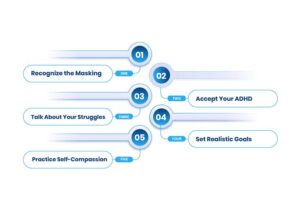
1. Notice The Masking
There is effort to impress the world to look ‘normal’ and in this state you will find the act of having ADHD very difficult emotionally and physically. Try to notice when you are faking being more organized, calm or focused than you actually are.
2. Acknowledge The ADHD
This concept means that the reason your brain is different does not necessarily mean that the differences are wrong. Self-acceptance is a way of helping you to see positive not just negative in relation to ADHD. The idea of accepting yourself gives space to move beyond the feeling of shame. It also shows you that the ADHD is a facet of you, not a failing of you, and that tolerance is the foundation of peaceful and honest living.
3. Verbalise The Problem
Talking brings others closer to the real thoughts and feelings. Telling people that what you feel inside. This form of truth brings you closer to people, makes your life less lonely. The people around you can support you in the best possible ways.
4. Realistic Goals
Don’t force yourself to set goals that seem impossible. Instead, set small, doable goals. It keeps the anxiety at bay and the motivation going, one step at a time, and this step should be valued. When working with realistic goals, it avoids comparing oneself with others, getting back on track.
Be Kind to Yourself
When the mistake happens, you should treat people with kindness. Forgetting, being inattentive, and moving slower-all is part of the condition of ADHD, that’s ok. Stop feeling guilty and tell yourself instead that you’re doing the best you can. Self-compassion creates resilience, tranquility. Once you are kind to yourself, you are more likely to give up the masking and to heal.
Treatment of Masking ADHD
Therapy makes you speak freely and understand how to cope more effectively. Some medications can enhance concentration and decrease the masking. Family, friends, or group support makes it strong to remain authentic. You can masking with ADHD and be yourself with the correct assistance,
Tips To Unmask Your ADHD
- Be aware of not concealing your actual thoughts or behavior to fit in.
- Come to terms with the fact that you have ADHD, and it is not your fault.
- Be honest with close individuals regarding your problems and emotions.
- Have small and attainable targets rather than being perfect.
- Take frequent rest and relax your mind to overcome stress.
- Work on what you are good at rather than imitating others.
- Manage daily tasks with the help of planners, reminders, or apps.
Treatment of Masking ADHD
Therapy makes you speak freely and understand how to cope more effectively. Some medications can enhance concentration and decrease the masking. Family, friends, or group support makes it strong to remain authentic. You can masking with ADHD and be yourself with the correct assistance.
1. ADHD Masking Medication
ADHD medication management helps reduce core ADHD symptoms such as inattention, impulsivity, hyperactivity, and restlessness. As the symptoms improve, the necessity to use a mask becomes lower. Depending on your needs and comfort, a psychiatrist can propose either stimulant or non-stimulant medicines.
2. ADHD Masking Test
An ADHD masking test is an evaluation that assists in determining the frequency of concealing or covering your ADHD symptoms. It examines your thoughts, feelings, and routines to identify masking patterns. The test is an indicator of the influence of masking on your stress and level of attention.
3.ADHD Masking Diagnosis
Diagnosis occurs as a result of an elaborate assessment by a mental health expert. The giver poses questions regarding your behavior, history, and your ways of coping. Knowledge of masking assists physicians in observing actual symptoms that otherwise would remain obscure in regular checkups.
Closing Remarks
Daily constant stress and fatigue may take place when hiding ADHD, which are even more exhausting especially for women. At MAVA Behavioral Health, we help our patients develop high ADHD masking awareness and consciousness in order to feel more comfortable. ADHD masking tests will reveal how often they hide their symptoms, what parts require assistance.
It includes the consideration of lifestyle change and medication if necessary for the treatment of inattention, impulsivity and restlessness symptoms. Medication might be helpful to minimize masking tendency, improve concentration, mood stability and sense of worth. MAVA Behavioral Health is by their side to make their lives meaningful, and to help them express their real identity by being true to their ADHD.
FAQs
What should I do to know whether I cover up my ADHD?
You tend to conceal your plight to be accepted among others. You make yourself as organized, focused, or calm as you can. It may become tiresome in the long run.
How do you define the 20-minute rule of ADHD?
The attention starts to wane after approximately 20 minutes of doing a task. Taking brief breaks helps your brain to remain alert and productive. It eliminates frustration and burnout. It is effective to use timers or divide tasks. This strategy is more effective in attention management.
Do ADHD people do masking?
Yes, there are a lot of people living with ADHD who conceal their symptoms. Women tend to dress up more to appear laid back. Wearing masks makes them fit and results in distress. It may cause burnout and stress. Awareness is useful in initiating coping measures.
What is the 30% rule in ADHD?
ADHD will slow down your energy or concentration by approximately 30 percent. Work can be more difficult than normal or slow. This will be useful in planning your day. It eliminates frustration and self-criticism. With the help and tools, life becomes easy.