Schizophrenia in children is a rare, but serious condition in mental health that impacts different areas of the child’s thinking, feeling and behavior. It typically occurs in teenagers or adults, but can also happen in childhood. If the symptoms occur before the age of 18, it is “early-onset schizophrenia” (EOS). In a very few cases, it occurs before age 13, and is referred to as very early onset schizophrenia (VEOS).
Diagnosing schizophrenia in childhood is often challenging as its features may be similar to those seen in other mental health and/or developmental disorders. Having a diagnosis and treatment early can make a difference in the child’s life. Knowing signs, causes and treatment choices better equips parents and caregivers to seek the most appropriate support in good time.
What is Childhood Schizophrenia?
Childhood Schizophrenia is identical to adult schizophrenia and is found in children at an earlier age, usually under the age of 13. It is very uncommon, occurring in less than 4% of all children. As adolescents grow, the rate gets higher and hence the onset of schizophrenia in teens or teenage schizophrenia.
It is crucial to point out that there is almost no toddler schizophrenia or, at best, it is very hard to clinically distinguish exactly what toddler schizophrenia is. Toddlers do not yet have the fundamental language/imaginary or movement skills needed for these emotions and tendencies, so normal toddler behaviors are very easy to mistake for severe psychological distress (such as imagination friends, or an ultra-tantrum!).
MAVA Behavioral Health provides compassionate virtual health services for children with schizophrenia, offering expert psychiatric evaluations and medication management. Our experienced mental health professionals work closely with families to support early diagnosis, symptom management through secure virtual appointments.
Core Signs of Schizophrenia in Children
When the condition worsens, there are definite signs of schizophrenia in children that appear. These generally fall into two categories – “positive” symptoms (extra activities) and “negative” symptoms (lack of usual activities).
1. Hallucinations
Children have the ability to see, hear, feel or smell things that are not there. Most frequently in younger patients hearing voices commenting on their behaviour or telling them what to do.
2. Delusions
These are beliefs that are not based on fact and are quite false and rigid. For instance, a child may develop paranoid schizophrenia in children and come to think his or her food is poisoned, his/her parents are working against him or her, or monsters are listening to his or her thoughts.
3. Disorganized Thinking and Speech
The kid’s speech may end up being disjointed; instead of having a single subject to speak in, it might easily jump from one unrelated topic to another, which makes it extraordinarily hard for anybody to follow the progression.
4. Abnormal Motor Behavior
This may involve childlike silliness or unwanted agitation to total inaction and unresponsiveness (catatonia).
Schizophrenia in Autistic Children
It’s beneficial to distinguish schizophrenia from other neurodevelopmental disorders very clearly. Autistic children with schizophrenia should have highly specialized diagnostic care. Autism Spectrum Disorder (ASD) and schizophrenia have some common characteristics, including social aversion, impaired communication, and abnormal emotional reactions.
There are, however, big differences between the two conditions. An autistic child is likely to have intense ‘obsessions’ or unconventional communication methods, but is unlikely to suffer from ‘hallucinations’ or delusions, like someone with schizophrenia. If the diagnosis of both disorders is entertained, careful longitudinal assessment by a child psychiatrist is necessary.
How to Diagnose Schizophrenia in Children?
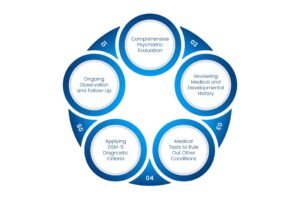
1. Comprehensive Psychiatric Evaluation
Careful psychiatric assessments by a trained child and adolescent psychiatrist are the first step in addressing a child’s or teenager’s schizophrenia. The specialist will look at the way your child thinks, feels, acts, and functions in the world around them. Parents/caregivers and teachers may also be asked to be interviewed to hear more about a child’s symptoms in their home and school environments.
2. Reviewing Medical and Developmental History
The physician reviews the child’s medical records extensively, developmental skills and family history of psychiatric illnesses. The awareness of the time of first onset of symptoms and their progression aides in the differentiation of schizophrenia in childhood from various developmental and psychiatric disorders. Family history can also be a good help in diagnosis.
3. Medical Tests to Rule Out Other Conditions
No one lab test is definitive of schizophrenia in the pediatric population. Doctors might order blood tests, an MRI or CT scan of the brain, and/or a neurological exam, however, to rule out infections, brain disorders, side effects of medications, substance abuse or other diseases that can bring about the symptoms of schizophrenia.
4. Applying DSM-5 Diagnostic Criteria
To diagnose the schizophrenia in children, mental health practitioners refer to the Diagnostic and Statistical Manual of Mental Disorders (DSM-5). Symptoms including hallucinations, delusions, disorganized speech and any negative symptoms must be present for 6 months or longer. The symptoms can also have a significant impact on the child’s academic, social and daily functioning.
5. Ongoing Observation and Follow-Up
Schizophrenia is a complex diagnosis that may need several consultations to make. Because there can be similarities with symptoms of autism, bipolarity disorder, severe anxiety or depression, specialists are monitoring the child’s progress prior to diagnosis. Follow up is recommended to establish the diagnosis and will help promptly start your treatment.
Is There a Child Schizophrenia Test?
A child schizophrenia test conducted online may assist parents in establishing if there are any indications of schizophrenia, but it is not able to determine if a kid does in fact possess schizophrenia. These quizzes are intended to be screening tests only and should NOT be used to replace the advice of a medical professional. All children are unique, and many symptoms may be related to other mental health and/or medical problems.
If you’re worried about your child’s behavior, the first step is to consult a trained child psychiatrist or mental health expert to evaluate your child. They will evaluate your child’s symptoms, medical and developmental history, before determining a diagnosis. Early diagnosis and intervention can be important for a child’s lifelong health. online medication management for children with schizophrenia delves into the details of a child’s medication used as a part of the treatment plan for schizophrenia.
Schizophrenia in Children Treatment Options
| Treatment Type | Description |
| Antipsychotic Medications | These help manage chemical imbalances in the brain to reduce the severity of hallucinations and delusions. Children must be monitored closely for side effects. |
| Psychotherapy | Individual Cognitive Behavioral Therapy (CBT) helps children understand their symptoms, develop coping mechanisms, and manage stress. |
| Family Therapy | Equips parents and siblings with the education, communication tools, and emotional support needed to navigate the challenges of the condition. |
| Educational & Social Support | Specialized school plans (like an IEP) and social skills training help the child stay engaged academically and socially. |
End Note
Childhood and teenage schizophrenia can be difficult, but if diagnosed early with an appropriate treatment plan, the quality of life of a child with schizophrenia can be greatly enhanced. 33% of children will have their mental health symptoms controlled by their medication, therapy, supported family environment, and/or an integrated mental health care system, as well as being able to pursue education and develop relationships and a sense of purpose in life.
At MAVA Behavioral Health, our programs and services are patient-focused, evidence-based, convenient and delivered via telehealth. Our skilled mental health experts create individualized treatment strategies that could involve monitoring medication levels with them, participation in therapy, and routine follow-ups to foster long-lasting recovery. Do not hesitate to ask for professional assistance if you see your child’s symptoms are indicative of schizophrenia. Early intervention can have an impact, and MAVA Behavioral Health is here to help support your family along the way.
FAQs
What is the youngest age at which a child can be diagnosed with schizophrenia?
Schizophrenia in children is very unusual before the age of 13. Diagnosis is usually done when the teenager is a teenager through a comprehensive medical investigation.
Can childhood schizophrenia be mistaken for a vivid imagination?
Yes, young children often have imaginary friends or active imaginations, but schizophrenia symptoms are persistent, distressing, and interfere with daily life.
What are the first signs of schizophrenia in children?
Some of the early indicators are changes in school performance, changes in behavior, emotional changes, bizarre fears, hallucinatory behavior, social withdrawal, and confused thinking.
How is schizophrenia in children diagnosed?
To diagnose schizophrenia, a child psychiatrist must conduct psychiatric evaluations and medical examinations, as well as gather information from other sources, and complete the diagnostic criteria from the Diagnostic and Statistical Manual of Mental Disorders, 5 (DSM-5).
Can childhood schizophrenia be treated?
Yes, treatment consists of medication, psychotherapy, family support, and routine follow-up care. Early services for intervention help to enhance long-term outcomes and quality of life.