
Emotional detachment is a condition in which individuals lose touch with themselves or the feelings of another person. It frequently presents itself in relationships or work, or daily life, in the form of numbness or detachment. Although people might appear relaxed at the surface, they also experience some internal issues with intimacy and togetherness.
It may serve as a personal defence against stress, heartbreak, or other overwhelming situations that can also lead to loneliness and miscommunication. When you notice the way you feel, but you do not allow your actions to interfere with what you feel, you will be able to make your relationships better and decrease stress, and experience inner balance.
What Is Emotional Detachment?
Emotional detachment describes how individuals become detached from their emotions or those of other people. Emotionally detached people tend not to become too close in relationships. This may complicate the process of bonding with other people. Emotional numbness may occur to shield oneself against stress or suffering. Some acquire it because of previous experiences or trauma.
In addition, it would help in the short run; detachment in the long run can lead to loneliness or a lack of understanding. It is possible to learn how to understand this condition and cope with it, which will enhance relationships and emotional well-being.
Emotional Detachment Symptoms
Signs of emotional detachment in a relationship:
- Poor emotional conversation interest.
- Problem communicating emotions.
- No deep or personal issues.
- Difficulty in making close relationships.
- Minimal compassion for others.
- Avoiding the presence on emotional occasions.
What Causes Emotional Detachment?
Stress and pressure in everyday life.
- History of trauma, abuse, or loss of emotion.
- Blocking feelings due to personality issues.
- The habit of not being close to protect oneself.
- Inability to trust other people or to share feelings.
- Overwhelming life events cause numbness.
- Childhood neglect or emotional deficit.
- Adjusting to loss or significant life changes.
- Experience of insecurity in the home or workplace.
How To Practice Emotional Detachment?
Emotional detachment is a skill that involves learning how to remain calm and balanced in any situation without being overwhelmed by emotions. It makes you think straight and makes wise decisions rather than hastily making decisions. Therefore, it does not imply that you should not care about your feelings; it implies only to watch them and not let them dominate you. The following are some methods of being emotionally detached:
- When you are emotionally strong, take deep breaths.
- Establish specific demarcations with individuals.
- Spending on doing what you like or hobbies.
- Withdraw yourself when dealing with stressful situations.
Emotional Detachment in Marriage
Emotional withdrawal in marriages is when the partners cut off. It is as though a wall is rising between us, and communication becomes difficult, and one cannot feel connected. This may occur due to numerous reasons. All the conflicts that are not solved, the stress, or significant changes in life can put a wall between people.
Other times, it evolves gradually since partners no longer find time to spend with one another and no longer feel the intimacy that had existed between them. It may serve as a means of self-preservation against getting hurt or having to come to terms with troubled feelings. When you see this distance, there are steps that you can take to get back to one another. The action will assist in restoring your relationship.
- Get your emotions out in the air.
- Spend quality time together.
- Express minor displays of affection every day.
- Be a non-judgmental listener to your partner.
- Get professional assistance from a therapist.
Emotional Detachment in Relationships
Emotional Detachment in Relationships occurs when one of the partners is remote or lacks feelings towards the other. Empathy cannot just run, and communication remains superficial. The estranged partner might not be able to engage in serious conversation, express little affection, or remain silent when it is emotional.
- Your mate does not want emotional discussions.
- Your partner remains silent in the conflicts.
- Your partner is not very interested in intimacy.
- Your partner drifts away in times of trouble.
Detachment Disorder in Adults
Detachment Disorder in adults occurs when an individual is unable to establish strong emotional attachments. Their relationship may be numb, distant, or guarded. This makes life in a day confusing as they find it hard to trust, open up, or tell others how they feel. This emotional disconnect influences friendship, familial lives, and relationships. Detached adults find themselves feeling lonely but do not seek to get closer as they feel unsafe or intimidated.
- The individual does not allow emotional intimacy.
- The individual is numb when in a stressful situation.
- The individual has difficulties in trusting others.
- The individual remains aloof in relationships.
- The individual shuns serious conversation and introspection.
How To Overcome Emotional Detachment?
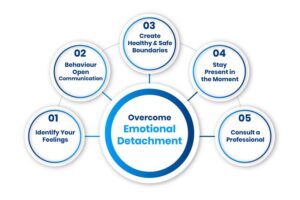
Identify Your Feelings
Begin by paying attention to the way you feel at various times. Always remember to concentrate on basic emotions such as sadness, anger, or calm. Write or read out the feeling. This is to aid your mind in being in touch with your inner world.
Behaviour Open Communication
Say little with one whom you can trust. Begin slowly and maintain the discussion. State the explanation of how you feel in short sentences. By sharing regularly, emotional distance is decreased.
Create Healthy and Safe Boundaries
Establish boundaries that guard your harmony without preventing communion. State your requirements in simple and brief terms. Relationships make you feel safe in a healthy space. It also facilitates emotional development.
Stay Present in the Moment
Attend to your breath, the environment, or your physical senses. Be aware of what occurs within you without making judgment. Spending time allows you to get back in touch. It also decreases tension and emotional numbness.
Consult a Professional
A therapist will make you realise what your emotional blocks are. They provide mechanisms that facilitate trust and relationships. Frequent meetings can assist you in discovering emotions. This results in increasing emotional awareness.
How To Fix Emotional Detachment?
- Be aware of how you feel in ordinary situations.
- Tell someone you are close to a little about yourself.
- Learn to breathe deeply to be in the moment.
- Permit friendly intimacy with others around you.
- Establish healthy boundaries without retreating.
- Take time to learn about emotional triggers.
- Remain in healthy living habits and self-care.
- Use the assistance of a therapist.
Emotional Detachment Treatment
The therapy of emotional detachment will help you to be in touch with your emotions safely and gradually. Through the direction of therapists, you learn to observe feelings, discuss them, and comprehend why distance presents itself. Drug use can be useful in cases of anxiety or depression that influence emotional attachment.
Emotional Detachment Test
An emotional detachment test enables you to know how detached you are from your feelings or relationships. It tests your response, communication pattern, and ease of intimacy. The outcome determines the following action of support or therapy.
Initial Assessment
The first evaluation involves a mere conversation regarding your symptoms, day-to-day struggles, and how you feel. A professional is a good listener who asks questions to get the picture of what is happening. This action aids in finding the cause of emotional distance and making appropriate care arrangements.
Medication Management
When the state of anxiety, depression, or trauma influences your communicative capacity, medication management will help you maintain emotional balance. A provider examines your symptoms and talks about the options, and keeps track of the effectiveness of the medication. It is aimed at decreasing emotional numbness and enhancing general well-being.
End Note
Emotional disconnection may be confusing, and it does not last long. The Emotional distance is felt by many as stress, trauma, or fear renders being close to be unsafe. Emotional connection is easy and natural when you know what to watch and take small steps towards healing. Even the slightest changes, such as observing your emotions, having an open-minded talk, and being present, can gradually restore trust in yourself and in your relationships.
Keep in mind that you are not emotionally detached. The warmth, closeness, and stronger emotional bonds in your life can be restored with patience, the right tools, and a safe environment. To achieve better treatment with medication, you can contact MAVA Behavioural Health. We are here to assist you, whether through medication or telehealth services.
FAQs
What is emotional detachment?
Emotional detachment means being unconnected or, rather, unattached to your own emotions or to people. It makes it difficult to show feelings and even to associate with other people closely.
What is the reason behind emotional detachment?
Emotional detachment can be caused by stress, previous trauma, fear of getting hurt, or a mental issue such as anxiety or depression. It usually forms as a self-defence mechanism.
What do I do to know whether I am emotionally detached?
Symptoms consist of evading emotional conversations, numbness, lack of involvement in relationships, and inability to trust and feel.
Is emotional detachment amenable to treatment?
Yes, treatment, self-knowledge, positive communication, and even medications can help you get in touch with your feelings and other people.
What is the duration of overcoming emotional detachment?
Times are different for every individual. Through persistence, encouragement, and practice, the majority will feel that they have improved within a couple of weeks to months.