

You may have heard, or known someone who constantly washes their hands, is phobic and irrationally afraid of dirt, or is excessively concerned about cleanliness and children. This will not only be a habit, but it may also indicate the potential of Contamination OCD, which is an anxiety disorder that leads an individual to have a fear of germs and contamination. It is not considered a threatening disease, but it can disrupt everyday life and is uncomfortable and stressful when left untreated.
Similarly, with proper treatment and early treatment, the patients themselves have relief and have control over their lives. In this article, we’ll discuss OCD-contamination, the typical symptoms to be on the lookout for, and a couple of handy tips to put it to rest, which are effective in upgrading the condition. Read further and discover how you can cope with it easily!
What Is Contamination OCD?
Contamination OCD is a type of obsessive-compulsive disorder in which one may experience extreme fear of germs, dirt, or even catching an illness just because they touched something. These may be stressful and uncomfortable to the extent that basic and simple daily things become tiresome and taxing.
In addition, individuals might engage in some actions repeatedly, e.g., washing their hands very frequently, cleaning a particular item, certain places, or people whom they think might transmit an infection to them with a germ. These activities can distract them temporarily not to thinking about their cares, but the fear always returns, and it becomes difficult to get out of that vicious circle. Thus, OCD contamination is not about being overly or excessively clean, but a problem in the mind that needs due indulgence.
Contamination OCD Symptoms
There are the following signs of contamination OCD:
- Feeling of constant terror of germs, dirt, or disease
- Washing or cleaning hands excessively when there is no need
- Avoiding places, things, or people believed to be dirty
- Getting worried or uncomfortable when not able to wash or clean
- Repeating various cleaning rituals to decrease fear or stress
- Holding the idea that common objects are dirty, even in a safe situation
Contamination OCD Causes
These are part of the overall top reasons for OCD contamination:
- Genetics – OCD or the anxiety disorders may have a familial trait
- Brain chemistry- there might be an imbalance of brain chemicals, including serotonin
- Traumatic events- stressful life events may trigger symptoms as a result of trauma, illness, or change
- The aspect of personality- highly anxious, very cautious, and perfectionistic individuals may be more vulnerable
- Hyper brain networks abnormally- the brain networks relating to phobias and habits may be hyperactive
How does Contaminated OCD Affect your Mental Health?
Contamination OCD may significantly impact your mental health, leading to constant worry and fears. It will be difficult to relax when your mind tells you there are things to fear, such as germs or fears of sickness. You might end up being anxious, restless, and even depressed due to this constant pressurization. Gradually, the brain enters a loop of obsessive thinking and cleaning behaviors, and it becomes hard to pay attention to work/ school and relationships.
Furthermore, it may also decrease self-confidence and make one feel lonely. Thousands of individuals experience fear of touching a porous object, going out, and hugging .This may result in aloneness and feelings of burnout. Hence, experiencing these fears daily is quite a burden on mental health, and that is why professional help and treatment are of high importance. You may also like to read, unusual behavior and OCD in children
Does OCD Get Worse with Age?
OCD is not always worse as one grows older, but with no treatment, the severity of the disease can be enhanced. The same is true of obsessive thoughts and compulsive behaviors, only that in some individuals, stress, life situations, or health problems may complicate their ability to cope with the condition in aging. Without taking care of them, the habits can turn rigid and more pervasive in the day-to-day routines.
On the other hand, the majority of people are capable of controlling their OCD and preventing it from developing any further through the assistance of treatment and medication. Hence, despite OCD developing into a more hectic issue in the form of old age in case it is not addressed early enough, early diagnosis and consequent management might curb it down.
How To Help Someone with Contamination OCD?
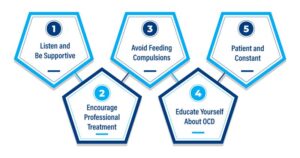
1. Listen and Be Supportive
The best way to help an individual with contamination OCD is through showing support; it is not important to judge but to listen. Being empathic can make them feel that they are not lonely in the fight.
2. Encourage Professional Treatment
The other factor is to promote professional intervention, i.e., lifestyle changes or medication. Explain to them that OCD is not a weakness but rather a mental condition and that it will help a lot to seek the service of a specialist, and also in their life.
3. Avoid Feeding Compulsions
You also do not have to feed on their compulsions either. As an example, when they desire to clean, you can assist them in doing that without embarrassing them or being aggressive to introduce healthier coping strategies. Providing recovery implies not encouraging the circle of rituals.
4. Educate Yourself About OCD
You can also get to know more about OCD yourself to understand better what happens to them. The better you know, the easier it will be to react in a caring and patient manner when it manifests.
5. Patient and Constant
Lastly, be patient and always stay the same since recoveries are time-consuming. It should be recognized that small improvements are good and not to consider failures. Your consistent encouragement can make a great contribution to their path.
How To Overcome Contamination OCD?
Some of the ways that we may beat contamination OCD are as follows:
- Avidly Exposure and Response Prevention (ERP), helping to confront fears in a non-ritualistic fashion.
- To reduce obsessive thoughts and anxiety, physicians can prescribe antidepressants like SSRIs.
- Practicing relaxation processes such as deep breathing and meditation, or exercises.
- Meeting a mental health worker to be able to monitor progress and to adjust treatment.
Contamination OCD Treatment
Contamination OCD Test
A contamination OCD test will assist in determining the strength of the obsessive thoughts as well as the compulsive behaviors. Mental health professionals can inquire about the phobias of germs, cleaning, and avoiding behavior. The test assists one interpreting the seriousness of OCD. In that manner, the physician can prescribe an appropriate treatment strategy.
Medication Management
The obsessive thoughts and anxiety through contamination OCD can be ameliorated with the use of medication. Physicians most commonly prescribe antidepressants, such as the SSRIs, to normalize brain chemicals. Medication is most effective way for long-term outcomes. It is capable of simplifying and de-stressing everyday life.
Acceptance and Commitment Therapy (ACT)
The treatment of ACT is such that it makes individuals accept their thoughts of OCD instead of trying to fight against them. It offers the teachings of focusing on values and worthwhile endeavors amid fears. Anxiety dissipates over time as one learns to stop acting on the thoughts. It is a more efficient solution in the sphere of improving overall mental well-being and coping skills.
Mindfulness Strategies
The skills of mindfulness include the quality of being in the present without being judgmental. Meditation or deep breathing will cause de-stressing and abating obsessive thoughts. The addictive behaviors can be countered with the help of mindfulness. It can facilitate the contamination anxiety management process.
Closing Remarks
The medication management of OCD contamination at the MAVA Behavioral Health is aimed at helping the patients regain control of their lives. Our psychiatrists or mental healthcare experts thoroughly evaluate the symptoms in every person to prescribe them the most adequate medications to alleviate obsessive thoughts and repetitive habits.
We develop an individualized approach to the treatment, which will incorporate the anxiety and contamination fears in patients and enable them to cope with the condition. We aim to enhance everyday functions, lower the stress levels, and contribute to long-term mental health through constant support, direction, and supervision. Contact MAVA Behavioral Health to get professional help.
FAQs
What is contamination OCD?
Contamination OCD, Obsessive-compulsive disorder, is a situation where the individual panics over germs, dirt, or illness. This is the fear that often contributes to repetitive cleaning and washing or refusal to touch some objects and avoid some places.
What are the typical symptoms of OCD?
Symptoms are compulsive hand-washing and cleaning, avoiding possible sources of contamination (objects that may be considered dirty), fear of being unable to clean up, and thoughts about germs or sickness that cannot be suppressed.
What is the cause of contamination OCD?
It may be genetic, brain chemical imbalances, a stressful life event, personality such as perfectionism, or a learned behavior through an extremely cautious environment.
Is contamination OCD treatable?
Yes, contamination OCD can be treated, including by non-pharmacological interventions like medication management to limit obsessive thoughts and behaviors.
What can I do to assist a person with contamination OCD?
Be non-judgmental, advocate for professional care, and be cautious of rewarding any compulsions; educate yourself to understand triggers, and also be consistent and patient as they pursue their treatment plan.