

Lewy Body Dementia (LBD) is among the most complex and misconceived types of dementia, which impacts the way people think, move, behave, and feel. The second most prevalent form of progressive dementia following Alzheimer’s disease, but it is commonly not diagnosed or confused with Parkinson’s disease or other neurological conditions.
Similarly, early awareness of Lewy Body Dementia can help patients and their families be better prepared, seek appropriate care, and manage symptoms more effectively. This is an in-depth reference on Lewy Body Dementia, including symptoms, causes, diagnosis, stages, life expectancy, and treatment options.
What Is Lewy Body Dementia?
Lewy Body Dementia is a progressive neurological disorder caused by the abnormal buildup of protein deposits known as Lewy bodies in the brain. These deposits interfere with the normal functioning of the brain, affecting memory, thinking, movement, sleep, and mood. Lewy Body Dementia is a broad term that incorporates Dementia with Lewy Bodies (DLB) and Parkinson’s Disease Dementia (PDD).
The loss of memory might not be the initial symptom, as in Alzheimer’s disease. Rather, the patients tend to have visual illusions, mobility problems, changes in awareness, and insomnia at the beginning of the illness.
Lewy Body Dementia Symptoms
- Hourly changes in alertness, attention, and cognitive ability.
- Visual hallucinations, which generally see things, animals and objects that do not exist.
- Motion symptoms, such as muscle rigidity, lack of movement, tremors and loss of balance (Parkinson-like)
- Memory issues, which are generally mild to Alzheimer’s disease.
- Problem-solving, planning, decision-making, and Multitasking problems.
- Sleep dysfunctions, particularly the REM sleep behavior disorder.
- Changes in mood like depression, anxiety, apathy and irritability.
Lewy Body Dementia Causes
- The presence of abnormal deposition of Lewy bodies, the clumps of alpha-synuclein protein, in nerve cells that interfere with the normal brain structure and functioning.
- Decreased concentrations of major neurotransmitters dopamine and acetylcholine, which cause cognitive impairment and motor symptoms.
- Brain damage to the areas like alertness, emotional stability, muscular motor coordination, and attention.
- Brain changes like aging that make the brain prone to neurodegenerative diseases.
- Inheritable factors that have the potential of raising risk, but Lewy Body Dementia is not often directly inherited.
- Lewy Body Dementia, Parkinson’s disease, or other similar neurological disease in the family history.
- Pathology of Alzheimer or Parkinson disease in certain individuals, which leads to the overlap of symptoms and development of the disease.
Lewy Body Dementia Crying
Individuals with Lewy Body Dementia can be characterized by a tendency to cry a lot or changing emotions. It may occur abruptly and without any obvious explanation due to alterations in brain activity that influence mood and the ability to control emotions. It is not necessarily related to sadness but is a symptom of this state. In others, the physicians might prescribe drugs to minimize extreme mood swings.
Life expectancy in the case of Lewy Body Dementia fluctuates, though on average, the life expectancy of a patient with Lewy Body Dementia is between 5 and 8 years after diagnosis. The development is determined by age, general health status, and the ability to control the symptoms. Lifespan can be compromised by complications such as infections, falls, or heart issues. Quality of life can be enhanced through early diagnosis and proper medical care, including symptom control and caregiver support.
7 Stages of Lewy Body Dementia
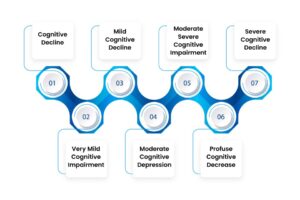
Stage 1: No Cognitive Decline
At this stage of the disease, people have no vivid features of dementia and can live independently in their everyday life. There might already be changes in the brain, but they are not yet visible. Emerging sleep problems or mood swings do not necessarily involve evident cognitive decline. At this stage, family members are not concerned about any issues. This is a stage at which medical attention is rarely sought.
Stage 2: Very Mild Cognitive Impairment
Occasional slight alterations, such as forgetfulness, lack of concentration, or slight confusion, characterize this phase. The symptoms can easily be mistaken for those of old age and do not really disrupt daily life. People can develop a sense of minor anxiety or sleep disorders. There are minor or no motor symptoms. This stage is the cause of clinical diagnosis.
Stage 3- Mild Cognitive Decline
Cognitive symptoms also become more evident, including difficulty with problem-solving, planning, and attention. People can have mild mobility disorders, including stiffness and slow walking. Disturbance of sleep and mood changes occur more often. The daily activities will be more time-consuming, but independence is preserved to a significant extent. At this point, early medical assessment can be initiated.
Stage 4: Moderate Cognitive Depression
Problems of memory, thinking and attention begin to disrupt daily activities. Visionary hallucinations and mental lapses develop further. Motor symptoms (tremors, rigidity, and balance problems become more intense. Lewy Body Dementia is more likely to be diagnosed at an earlier stage.
Stage 5: Moderate Severe Cognitive Impairment
At this age, people require assistance with daily activities such as dressing, bathing, and preparing meals. The presence of confusion, hallucinations and changes in behavior increases. The degree of movement becomes more problematic, increasing patients’ risk of falls. Communication and speech can be slowed down and less clear. Caregivers must offer support.
Stage 6: Profuse Cognitive Decrease
This stage is characterized by severe memory loss and difficulty recognizing familiar people or environments. Motor symptoms may become aggravated and may require the use of mobility aids or assistance. The outbursts of emotions, anxiety, and sleep disorders are frequent. Difficulties with swallowing and hypersensitivity to medications can manifest. Full-time care is normally essential.
Stage 7: Severe Cognitive Decline
This is the last phase characterized by intense mental and physical disability. People become unable to communicate efficiently and demand full guidance on all the daily operations. Rigidity of muscles, inability to swallow, and high chances of infection are typical. Supportive and palliative care are important for quality of life.
Lewy Body Dementia Diagnosis
Lewy Body Dementia can be diagnosed as the symptoms may be similar to those of Alzheimer’s disease and Parkinson’s disease. Physicians typically begin by examining an individual’s medical history and inquiring about memory, cognitive, behavioral, sleep, and motor alterations. They can also administer cognitive tests to assess attention, problem-solving, and memory abilities. The symptoms, such as visual hallucinations, sleep disorder, and changes in alertness, that a doctor observes help in the identification of LBD.
MRI or PET brain testing can be performed as a rule-out test to exclude other diseases; however, no test can prove Lewy Body Dementia. In some cases, sleep research can be applied to identify REM sleep behavior disorder, which is prevalent in LBD. An in-depth analysis by a specialist or neurologist is essential to make an accurate diagnosis, enabling treatment and care to commence early and create better living conditions.
Lewy Body Dementia Treatment
Medications for Cognitive Symptoms
Several medications are usually used to enhance memory, attention, and alertness in patients with Lewy Body Dementia, such as cholinesterase inhibitors. Such drugs can also be used to minimize hallucinations and confusion, which are common symptoms. Although they do not cure the condition, they can decelerate mental worsening and improve everyday functioning. Regular monitoring is necessary to prevent side effects.
Treatment of Behavioral and Psychiatric Symptoms
Hallucinations, delusions and anxiety and depression are common conditions in people with Lewy Body Dementia. Drug methods should be used last, such as reassurance, routine, and environmental adaptation. In case of medication requirement, medications are well chosen because they are very sensitive to some psychiatric drugs. Low-dose alternatives can be administered under strict supervision. The ability to manage such symptoms enhances the quality of life of both patients and caregivers.
Sleep Disorder Management
A characteristic of Lewy Body Dementia is sleep abnormalities (particularly, REM sleep behavior disorder). Other factors to consider include sleep hygiene and safety measures, as well as drugs to curb nighttime behaviors. Increasing sleep will go a long way toward reducing confusion and agitation during the day. A regular sleep pattern and a relaxing bedtime routine are highly recommended. Treatment of sleep problems can improve overall symptom management.
Caregiver Support and Education
Caregiver education is also a mandatory component of the treatment of Lewy Body Dementia. Knowing how symptoms vary can help caregivers respond to the patient with patience and confidence. Caregiver burnout and stress are minimized through support groups and counseling. Medication and daily care are also enhanced with education. A positive outcome in patients and families is achieved when there is strong caregiver support.
End Note
Lewy Body Dementia is a serious brain condition that affects memory, movement, behavior, and sleep. While there is no cure, early diagnosis and appropriate treatment can help manage symptoms and improve daily life. Medications and simple lifestyle changes can reduce confusion, movement problems, and sleep issues.
At MAVA Behavioral Health, we focus on understanding each patient’s needs and creating care plans that support both patients and their families. Ongoing medical care, education, and emotional support make a big difference over time. With proper guidance and compassionate care, people living with Lewy Body Dementia can experience better comfort, stability, and a more supportive care journey.
FAQs
Is Lewy Body Dementia the same as Alzheimer’s disease?
Lewy Body Dementia and Alzheimer’s disease are different conditions, although they share some symptoms. Memory loss appears earlier in Alzheimer’s, while movement issues, hallucinations, and sleep disturbances are more common in Lewy Body Dementia. Cognitive symptoms in Lewy Body Dementia often fluctuate throughout the day. Treatment approaches also differ due to medication sensitivity. An accurate diagnosis is essential for proper care.
What are the early warning signs of Lewy Body Dementia?
Early symptoms may include changes in attention, visual hallucinations, sleep disturbances, and mild movement problems. Individuals may experience episodes of confusion that come and go. REM sleep behavior disorder is often an early indicator. Mood changes, such as anxiety or depression, may also appear. Recognizing these signs early can help guide timely treatment.
How fast does Lewy Body Dementia progress?
The progression of Lewy Body Dementia varies from person to person. Symptoms typically worsen gradually over several years, with periods of stability followed by noticeable decline. Cognitive and physical symptoms often progress together. Early intervention may help slow functional decline. Ongoing medical care is important to adjust treatment as symptoms change.
Can Lewy Body Dementia cause hallucinations?
Yes, visual hallucinations are a common symptom of Lewy Body Dementia. Individuals may see people, animals, or objects that are not present. These hallucinations are often vivid and detailed. Not all hallucinations require medication unless they cause distress or safety concerns. Proper management can reduce their impact on daily life.
Is Lewy Body Dementia fatal?
Lewy Body Dementia is a progressive and life-limiting condition. Complications such as infections, falls, and swallowing difficulties can affect life expectancy. However, many individuals live for several years after diagnosis with proper care. Supportive treatment focuses on comfort, safety, and quality of life. Early planning and medical guidance are essential.