
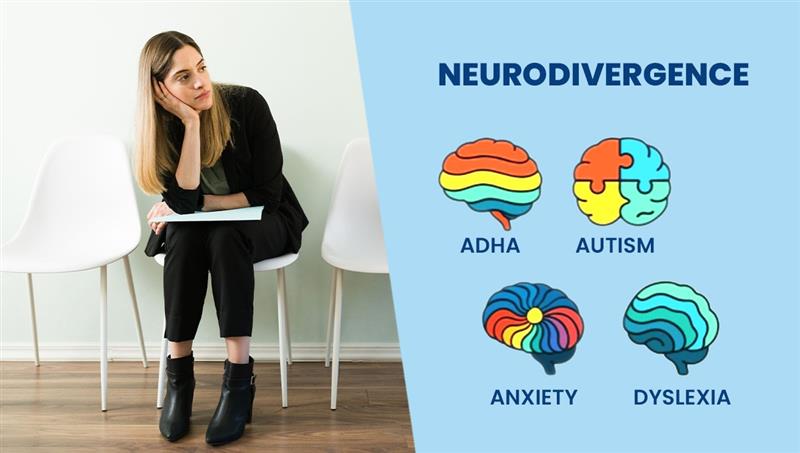
Neurodivergence implies that some people think, learn, and perceive the world differently. The brain operates in unique ways, and these disparities make individuals distinct. Some might be passionate about certain interests, and some might pay attention to minute details or learn differently than others do. Neurodivergence encompasses disorders like autism, ADHD, dyslexia, and so on.
Today, many people recognize that such differences are a natural part of human diversity. We should find a solution by leveraging the different strengths and abilities of these people rather than viewing them as problems. Understanding the concept of neurodivergence makes us more supportive and respectful of others. This knowledge will enable a more humane, inclusive world where people feel appreciated and accepted.
What is neurodivergence?
Neurodivergence is the fact that a person’s brain is different from what many people consider normal. The term describes natural differences in how individuals think, learn, feel, and react to the world. Individuals who are neurodiverse might have distinct ways of processing information, which can influence their ability to focus, communicate, or handle emotions. Autism Spectrum Disorders, Attention-Deficit/Hyperactivity Disorder, Dyslexia, and Tourette Syndrome are considered to be under neurodivergence. Such differences do not imply that there is anything wrong with a person’s brain. Rather, they demonstrate that human brains are functional in numerous ways.
Individuals who are neurodiverse will not be able to cope in school, the workplace, or socially because most systems have one mode of thought and learning. Simultaneously, neurodivergent individuals may contribute their strengths, including creativity, strong focus, excellent memory, and unusual problem-solving skills. With the support and understanding of families, schools, and workplaces, neurodivergent people can thrive and develop. Knowledge and hospitality help create spaces where everyone feels appreciated.
Neurodivergent examples
Some examples of neurodivergence are below:
- Autism Spectrum Disorder
- Attention-Deficit/Hyperactivity Disorder (ADHD)
- Dyslexia
- Dyspraxia
- Tourette Syndrome
- Dyscalculia
- Auditory Processing Disorder
- Sensory Processing Disorder
- Social Anxiety Disorder
Signs of Neurodivergence in Women
The following are the symptoms of neurodivergence in women:
- Inability to work on tasks or distract too easily.
- Experience of being overwhelmed during social situations or evading.
- Very sensitive to sound, light, touch or smell.
- The strong interests or keen concentration on certain issues.
- Difficulty in controlling emotions or unexpected moods.
- Difficulties with time management, organization or planning.
- Problem with decoding social communication or nonverbal behavior.
- Exhaustion following socialization or a sensory experience.
- Problems with clarity of thoughts or trouble in choosing the correct words.
- Fear, tension, or depression associated with day-to-day activities and demands.
Signs of Neurodivergence in Children
The following are the indicators of neurodivergence in children:
- Late speech or speech incomprehensibility.
- High routine-lovers and upset with changes.
- Heavy interest in a particular subject or activity.
- Sound, light, texture or food sensitivity.
- Problem with social understanding or socializing.
- Monotonous movements, gestures or behavior.
- Temper tantrums or emotional imbalance.
Signs of Neurodivergence in Adults
The following are the neurodivergence indicators in adulthood:
- Inability to concentrate on actions or to organize.
- Light, sound, touch, or olfactory sensitivity.
- Good attention to particular interests or hobbies.
- Difficulty controlling emotions or the abrupt change of mood.
- The difficulty in time management and daily plans.
- Poor social recognition or conversational ability.
- Exhausted with interpersonal contacts or stressful conditions.
- Poor multitasking or alternating between tasks.
What Causes Neurodivergence?
Genetics
Neurodivergence is usually familial, i.e., some traits or conditions may be inherited from parents to children. Genes can determine how the brain forms and processes information. Some individuals have inherited predispositions to ailments such as autism spectrum disorder or ADHD. These genetic variations determine how people think, learn, and act. Genes are important, but not the only determinants of the abilities and problems of an individual.
Brain Development
Neurodivergence can be influenced by brain development during both the prenatal and postnatal periods. Variations in the brain or its connections may alter how individuals process information or respond to stimuli. Development may be affected by early experience, nutrition and health in pregnancy. These may make certain individuals more sensitive to the world around them or more interested in a particular topic. Genetics and environment interact with brain development, which results in unique traits.
Environmental Factors
Environmental experiences can cause neurodivergence. Brain development can be influenced by exposure to stress, toxins, or infections during pregnancy or early childhood. The social interactions and learning environment also influence how people adjust and react to the world. Even routine life and family support can influence behavior and thinking. Genetics interacts with the environment to give rise to neurodivergent characteristics.
Neurochemical Differences
Variation in brain chemicals (dopamine or serotonin) may influence focus, mood, and behavior. These chemical variations can render individuals more responsive to stimuli or influence them during impulse regulation. They tend to contribute to conditions such as ADHD, depression, or anxiety. The neurochemistry affects attention, emotional regulation, and social behavior. Knowledge of these disparities can inform treatment and assistance.
Combination of Factors
Neurodivergence is normally a combination of genetic factors, brain maturation, environment and neurochemistry. There is no single factor that causes it. The combination of traits in each individual makes each person think and act differently. Appreciating this helps people accept differences rather than view them as problems. Neurodivergent individuals are better supported, understood, and provided with customized strategies.
Types of Neurodivergence
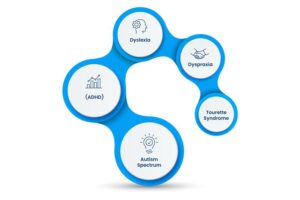
Autism Spectrum Disorder (ASD)
Autism influences the way an individual thinks, communicates, and interacts with others. Autistic individuals are likely to be interested in specific areas and have a routine. They may be hypersensitive to noise, light or touch. Every autistic person has their own strengths and weaknesses.
Attention-Deficit/Hyperactivity Disorder (ADHD)
It is difficult to concentrate, organize or curb impulses because of ADHD. ADHD individuals can do things impulsively and lose track of events. They may be energetic or restless. Creativity and special problem-solving skills are also part of ADHD.
Dyslexia
Dyslexia involves impairments in reading, writing, and spelling. Individuals with dyslexia can have difficulties with letters or words and are good with ideas. They tend to imagine things or patterns. They can build powerful learning techniques with encouragement.
Dyspraxia
Dyspraxia influences movement and coordination. Individuals with dyspraxia can be challenged by activities such as writing, shoe tying and sports. They may be clumsy or slow in learning motor skills. Dyspraxia has no impact on intelligence and creativity.
Tourette Syndrome
Tourette syndrome is a disorder characterized by sudden movements or sounds called tics. Such tics may be frequent and differ in severity. People with Tourette’s may experience stress when trying the tricks. Challenges are handled with help and understanding.
Hypermobility and Neurodivergence
In some individuals, neurodivergence and hypermobility tend to coexist. The term hypermobility refers to excessive joint movement and bending beyond the normal range. This may cause joint pain, fatigue, or persistent pain. Hypermobility is also exhibited by many individuals having neurodivergent conditions like autism spectrum disorder or Attention-Deficit/Hyperactivity Disorder. The association could be with the development of the body and the nervous system. Due to this association, some experience mental and physical problems in their day-to-day lives.
The hypermobility may then involve posture, balance, and coordination, leading to difficulty with daily activities. Sedentary activities, physical or sedentary measures, such as writing time, long sitting, or exercise, can result in discomfort or tiredness. In a case when a person also experiences neurodivergence, focus and emotional balance can be more complicated by pain or strain on the body. Gentle exercise, physical therapy, and lifestyle changes can help enhance strength and stability. Knowledge of the two conditions enables the families, teachers, and medical personnel to provide more effective care and understanding.
PTSD and Neurodivergence
Neurodivergence and PTSD may influence the manner in which an individual thinks, feels, and responds to stress. Post-Traumatic Stress Disorder (PTSD) usually begins when an individual experiences a traumatic event or some other highly stressful situation. Neurodivergent individuals, such as those with autism spectrum disorder or attention-deficit/hyperactivity disorder, might feel and perceive sensory input more intensely. As a result, stressful events can become more dramatic and difficult to cope with. This may enhance fear, anxiety, or emotional distress.
Individuals having both PTSD and neurodivergence might have difficulty concentrating, sleeping, and performing routine tasks. They can experience sudden fear, powerful recollections of past experiences, or a lack of ease in certain situations. Loud noises, crowded places, or sudden changes can exacerbate stress. Therapy and counseling help people feel more stable and secure, and healthy coping habits might help them be safer. Patience and understanding of families and communities can make it easier to address challenges and improve people’s conditions.
Is neurodivergence genetic?
The genetic relation of neurodivergence is often high. This implies that neurodivergent-related traits are transmitted to children via genes. A lot of individuals who exhibit conditions like Autism Spectrum Disorder, Attention-Deficit/Hyperactivity Disorder, or Dyslexia have members of their family who exhibit similar characteristics. Genes determine brain development, brain processing, and reactions to the environment. As a result, certain individuals exhibit differences in attention, learning, communication, or behavior from an early age.
Genetics, however, is not the only determinant of neurodivergence. The environmental factors, upbringing, and brain development are also significant. As a case in point, diet during pregnancy, stress, and childhood experiences can affect brain function. These factors put together the genetic features that determine how an individual thinks and learns. Every individual has their own brain pattern, so that neurodivergence may manifest in various ways. With knowledge, encouragement, and proper guidance, neurodivergent individuals can develop, learn, and apply their strengths in their daily lives.
Closing Remarks
Neurodivergence shows that every brain works in its own unique way. Some people think, learn, and respond to the world differently, and these differences can bring both challenges and strengths. When people understand neurodivergence, they create more supportive environments at home, school, and work. Early awareness and appropriate guidance can help individuals manage daily challenges and build confidence in their abilities. With proper care and understanding, neurodivergent individuals can grow, succeed, and live fulfilling lives.
MAVA Behavioral Health offers compassionate support, professional evaluations, and personalized treatment plans to help individuals and families navigate neurodivergence with confidence and care. If you or your loved one needs guidance, reaching out to experienced professionals can make a meaningful difference.
FAQS
How common is neurodivergence?
Neurodivergence is more common than many people think. Millions of people worldwide exhibit neurodivergent traits. Conditions such as autism spectrum disorder, attention-deficit/hyperactivity disorder, and dyslexia affect both children and adults. Many people live with these differences and manage daily life successfully with the right support and understanding.
Is neurodivergence a disability?
Neurodivergence is not always a disability. It describes differences in how the brain works. Some people may face challenges in learning, communication, or focus. At the same time, many neurodivergent individuals show strengths such as creativity, problem-solving skills, and deep focus on interests.
Can neurodivergence be diagnosed in adults?
Yes, neurodivergence can be recognized in adulthood. Some people only notice their traits later in life, especially if signs were mild during childhood. Mental health professionals can evaluate symptoms and provide guidance on better management and support.
Can neurodivergent people live a normal life?
Yes, neurodivergent individuals can live successful and fulfilling lives. With awareness, support, and proper strategies, they can manage challenges and use their strengths in education, careers, and relationships.
How can someone support a neurodivergent person?
Support begins with understanding and patience. Clear communication, structured routines, and a supportive environment go a long way. Professional guidance, therapy, and educational support can also improve daily functioning and emotional well-being.