

Do you experience low energy and constant mood swings, and feel heavy and hopeless? You may be in what is called Limbic ADHD. Attention Deficit Hyperactivity Disorder (ADHD) is a psychological disorder that afflicts millions of individuals throughout the world. One of the types of limbic ADHD systems has its own range of distinct signs and difficulties.
In this blog, we are going to discuss what Limbic ADHD is, its typical symptoms, possible causes, and the available treatment. We will also consider how it may impact self-esteem and how the brain may respond to it with the help of its adaptability, in the process known as neuroplasticity.
What is limbic ADHD?
Limbic ADHD is another form of ADHD that not only impacts a lack of focus or activity but also primarily mood and emotions. Individuals of this kind are normally depressed, fatigued, or demotivated. They tend not to be hyper or very impulsive, but they can appear quiet or no longer show interest in previously pleasant things.
In addition, limbic ADHD can leave an individual incapable of being happy even when life is good. This could result in them experiencing difficulty in getting going or in getting going to do their day-to-day activities.
Moreover, they do not show interest in doing anything; rather, they feel that their brain is not supplying them with the necessary impetus. The relevant help, which may include therapy, medicine, and good habits, will help them feel better. When you or your child has symptoms that potentially can be linked to limbic ADHD, you may contact us at MAVA Behavioral Health!
Limbic ADHD Symptoms
The symptoms of limbic ADHD are:
- Down most of the time or sad.
- Low energy or constant tiredness.
- Loss of interest in activities or hobbies.
- Trouble in initiating or completing activities.
- Low motivation and lack of drive.
- Feeling hopeless or stuck.
- Losing the ability to speak or socialize.
Overactive Limbic System Symptoms
Here are the symptoms of an overactive limbic system:
- Strong mood swings.
- Feeling anxious or worried often.
- Sadness or depression-like feelings.
- Overreacting to small problems.
- Trouble calming down after getting upset.
- Negative thinking patterns.
- Being overly sensitive to criticism or rejection.
- Difficulty controlling emotional reactions.
Limbic System and ADHD
The limbic system directs the brain to handle our emotions, motivation, and stress management. ADHD patients have a problem with this aspect of the brain. So, it can be one of the factors that make it hard for individuals to stay in a positive mood, cope with emotions, and easily complete daily tasks. In an individual with ADHD, an increase in the number of mood swings may affect the limbic system. Therefore, getting the right ADHD treatment is important to manage its signs and actual causes.
Moreover, mood problems that include sadness, energy, or anxiety in some cases link to the ADHD symptoms, because the limbic system is highly involves in emotion regulation. Therefore, emotions may be even more of an issue to certain people with ADHD than hyperactivity or impulsive behavior. Hence, such knowledge can facilitate treatment and, therefore, treatment, medicines and appropriate everyday habits that can improve not only focus but also emotions.
Types of ADHD Limbic
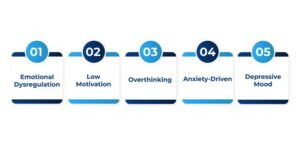
1. Emotional Dysregulation
This form of limbic ADHD is characterized by strong emotional responses that may appear disproportionate to the circumstance. Their mood is easily alternating, and it is hard to be in stable relationships and cope with stress. It can easily cause emotional exhaustion or not misunderstood.
2. Low Motivation
Individuals of this kind are usually prone to remaining trapped and discouraged, even in cases where they are aware of what to do. They might experience difficulty with initiating or completing activities that may result in procrastination and frustration. An overactive limbic system may inhibit reward pathways, thus leaving activities less rewarding. In the long run, this may influence work, school, and personal objectives.
3. Overthinking
In this form, the mind keeps repeating previous happenings or future concerns. People can overthink the discussions, actions, or errors and become mentally drained. The limbic system has an increased emotional memory, and hence it becomes difficult to forget the negative thoughts. This has the potential to be a vicious cycle of emotional stress being the cause of more overthinking. It tends to cause a lack of concentration in the present moment.
4. Anxiety-Driven
The type exhibits a high level of emotional sensitivity and avoids situations that could relate to unpleasant experiences. So, the individual may experience a worrying feeling, irritability, and physical ailments such as a high heart rate. The hyperactive limbic system maintains the body in an alert state, with no apparent threat. This may cause shunning in social or work settings. In the long term, it can bring about segregation and lost chances.
5. Depressive Mood
People of this nature tend to be constantly depressed, hopeless, or experience emotional numbness. They can lose their interests, such as hobbies, socializing, or activities that they care about. Therefore, this is not just a depression, but it is a limbic ADHD system in which the brain chemistry greatly influences mood. The hyper-reactive limbic system intensifies negative emotions and minimizes good emotional experiences. It can deteriorate to more serious mental issues without assistance.
You may also like to read: Online ADHD Treatment and Testing
Limbic ADHD Treatment Options
1. Psychiatric Evaluation
The management of limbic ADHD begins with a psychiatric assessment that assists in determining the moods and behavioral patterns in life. At the time of evaluation, the psychiatrist examines the medical history of the patient, symptoms, and mental health history. In addition, they can consider interviews, questionnaires, and observation to measure attention, mood, and emotional control. Therefore, the procedure ensures that the diagnosis is accurate and eliminates other conditions. On the basis of this analysis, an individual approach to treatment is developed.
2. Limbic ADHD Medication
Doctors prescribe the limbic medicine of ADHD to correct mood, attention, and motivation brain chemicals, and they monitor its effects. The regular medications will be either stimulants, antidepressants, or mood stabilizers, depending on the symptoms of the patient. Similarly, the psychiatrist periodically makes the necessary adjustments to decide whether the medication is effective or not, and its side effects. Thus, the constant checking will ensure that the patient stands to benefit as much as possible with the least risk. Follow-ups are a significant aspect of effective and safe treatment.
3. Lifestyle Changes
Change of lifestyle plays a major role in the management of limbic ADHD, together with medical attention. You can enhance your everyday health routine, including exercise, a healthy diet, sleep, and mindfulness, to boost your mood and focus. Such things as creating certain habits and breaking down tasks into small steps can make everyday life easier. The long-run changes help in the stabilization of the emotions and supplement the rest.
End Note
When you think you are experiencing Limbic ADHD, MAVA Behavioral Health provides full test results and helpful treatment services to ensure you cope with the symptoms. Our trained psychiatrists undertake the process of an in-depth assessment to know your special problems and arrive at the appropriate diagnosis.
Furthermore, the interventions can be a personalized approach to medication, lifestyle change, and supportive actions to enhance mood, attention, and general well-being. You can also enjoy telehealth services at your convenience, thus being able to get care from the comfort of your home. Get started on your path to mental health-contact us at MAVA Behavioral Health today and book your Limbic ADHD test today and start your course of treatment.
FAQs
What is Limbic ADHD?
Limbic ADHD is ADHD where the symptoms related to mood, such as sadness, lack of energy, and loss of motivation, are more prevalent as compared to hyperactivity or impulsivity.
How is Limbic ADHD diagnosed?
It is diagnosed by a detailed psychiatric assessment and the review of medical history, with or without ADHD, and specific tests.
What are the common symptoms of Limbic ADHD?
It can be described as persistent melancholy, decreased self-esteem, lack of focus, lack of drive, and hypersensitivity to rejection.
Can Limbic ADHD be treated?
Yes, it is often treated with medication management, lifestyle modification, and mood and attention-enhancing therapy.
Does MAVA Behavioral Health offer Limbic ADHD treatment?
Yes, MAVA Behavioral Health not only does Limbic ADHD testing but also treatment, both in-person and via telehealth.